Sintered Bushings for Machinery and Equipment
GLARY supplies sintered bushings and bearings in bronze, iron and copper-iron material systems. Compare material options and discuss dimensions and operating requirements for your application.
Sintered Bushings
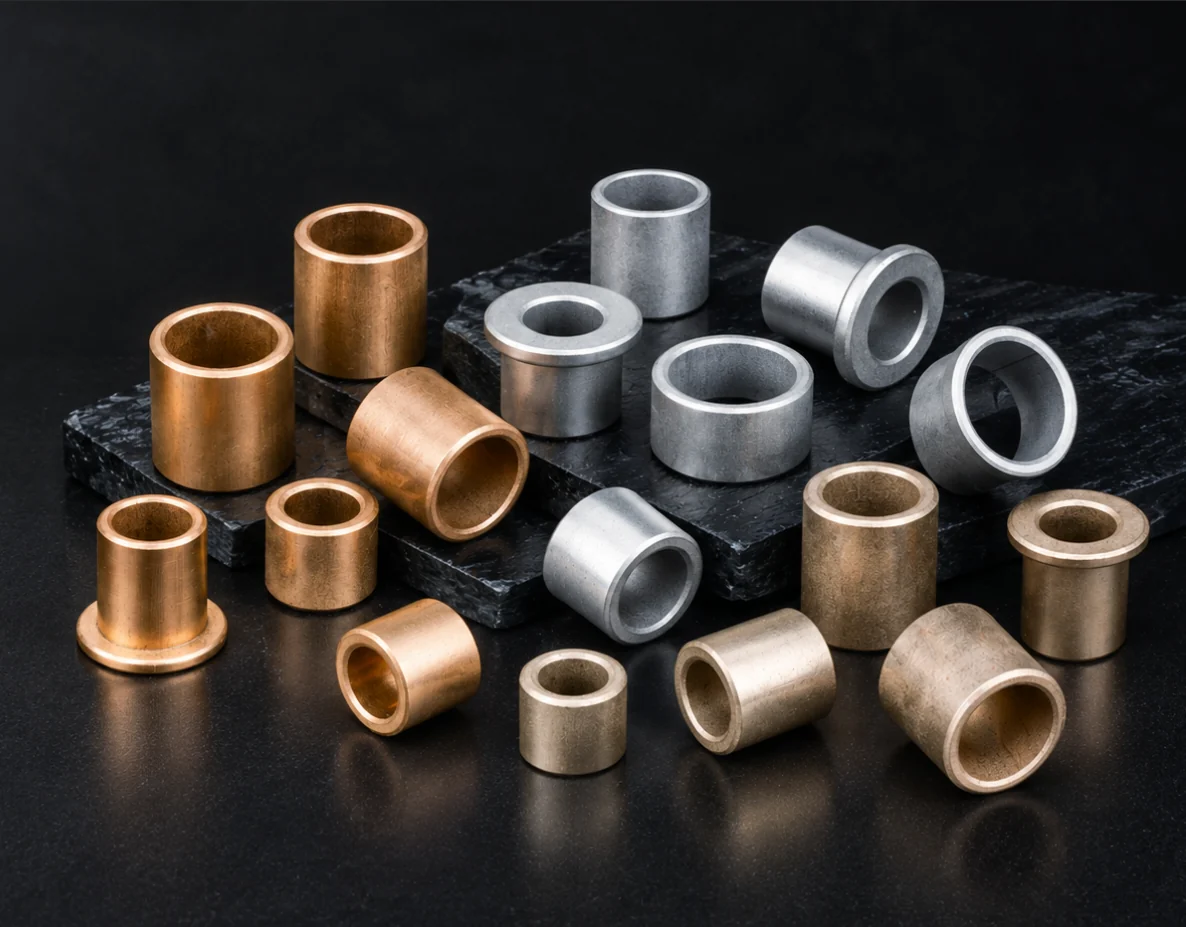
A sintered bushing is a porous metal bearing made by compacting metal powder and heating it below its melting point. The process forms a metal structure with interconnected pores. Depending on the material and design, these pores can hold lubricant or serve other functions in the bearing structure.
Sintered bushings are used in machinery where compact dimensions, consistent production and practical lubrication arrangements are important. Common applications include electric motors, fans, power tools and selected automotive components.
GLARY supplies sintered metal bushings and sintered metal bearings in bronze-based, iron-based and copper-iron-based materials. The right choice depends on the load, speed, shaft condition, lubrication method and operating environment.
How Sintered Bearings Work
Sintered bearings are produced through powder metallurgy rather than conventional casting or machining from solid metal stock. This process allows manufacturers to produce porous bearing materials and repeatable shapes in production quantities.
Many oil-impregnated sintered bearings use pores to retain lubricant. During operation, the lubricant helps form a film between the bearing surface and the shaft. The amount of lubrication available depends on the material, oil, bearing design and operating conditions.
Not every sintered bushing is oil-impregnated. Some sintered metal components are designed for different lubrication arrangements or specific mechanical functions. Before selecting a product, confirm whether the bearing is intended for oil impregnation, external lubrication or another operating method.
Sintered Bushing Materials
Sintered bushings are not made from one material alone. Bronze-based, iron-based and copper-iron-based materials have different characteristics, so the material should be selected according to the application rather than the product name alone.
Sintered Bronze Bushings
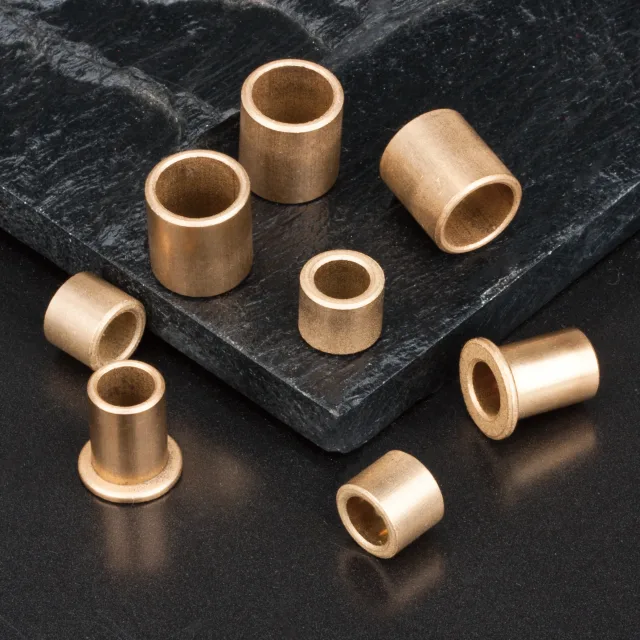
Bronze-based materials are widely used for oil-impregnated sintered bearings. They are common in compact rotating components where a built-in lubricant supply is useful.
Explore our Sintered Bronze Bushings for material details, available forms and product selection.
Sintered Iron Bushings
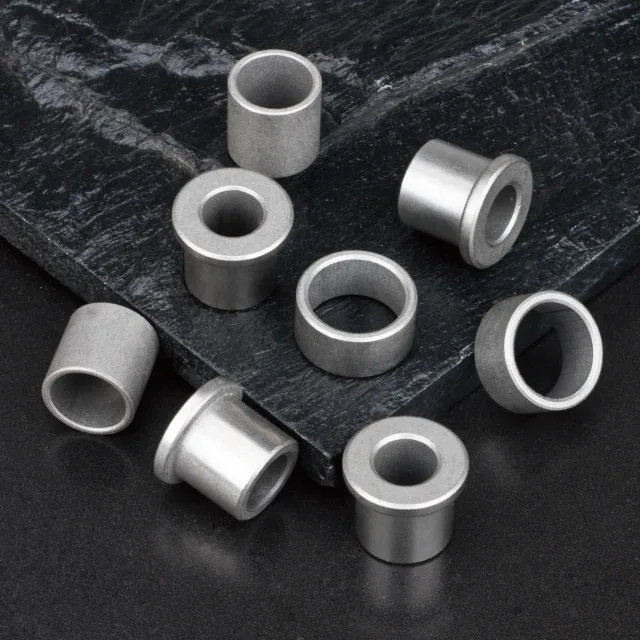
Iron-based materials are used in applications where their mechanical properties, production requirements and cost are suitable for the component. The actual performance depends on the material composition, density, impregnation and bearing design.
Explore our Sintered Iron Bushings for more information about this material group.
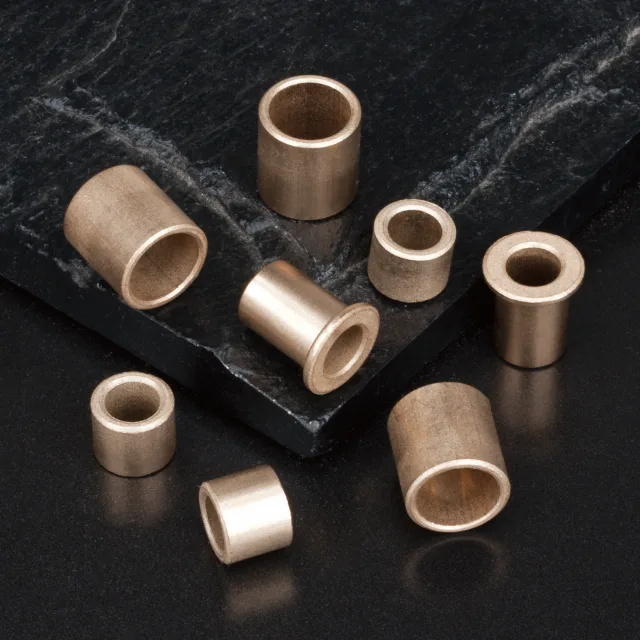
Sintered Copper Iron Bushings
Copper-iron materials combine copper and iron within a powder-metallurgy structure. Their suitability depends on the material formulation and the operating conditions required by the component.
Explore our Sintered Copper-Iron Bushings to review this material option.
Lubrication and Operating Conditions
Lubrication is one of the main factors to confirm when choosing a sintered bushing. An oil-impregnated bearing carries lubricant within its porous structure, but this does not mean it can operate under every load, speed or temperature without additional checks.
Before selecting a sintered bushing, confirm:
Load
The bearing must support the applied load without excessive deformation or wear.
Speed
Shaft speed affects friction, heat generation and lubricant behaviour.
Operating time
Continuous operation and intermittent starts can create different lubrication demands.
Temperature
The oil and bearing material must suit the actual operating temperature.
Environment
Dust, moisture, chemicals and other contaminants can affect service life.
Lubrication method
Confirm whether the design uses oil impregnation, external lubrication or another arrangement.
For applications with frequent starts and stops, high loads or demanding temperatures, the bearing should be checked against the actual operating conditions rather than selected by material name alone.
Common Applications
Sintered bushings are used in a range of compact mechanical assemblies. The appropriate material and design depend on the shaft, load, speed, duty cycle and available space.
| Application | Typical bearing position |
|---|---|
| Electric motors | Rotor shaft support |
| Fans and blowers | Motor shaft and rotating assemblies |
| Power tools | Compact rotating shafts and drive components |
| Automotive components | Selected motor-driven and rotating mechanisms |
| Tractors and agricultural equipment | Suitable auxiliary rotating mechanisms |
| Valve components | Selected actuating or rotating components |
These are possible application areas, not a guarantee that every sintered material is suitable for every position. Where loads, impact, contamination or temperature are demanding, compare the operating requirements with the bearing specification before making a selection.
How to Select a Sintered Bushing
When sourcing a sintered bushing, start with the actual component and its operating conditions. A general product description is not enough to confirm whether a bearing will fit or perform as required.
Confirm the dimensions
Provide the inside diameter, outside diameter and length. If the design uses a flange or another special shape, include the relevant dimensions and drawing.
Check the shaft
Shaft diameter, surface finish, hardness and dimensional tolerance affect the contact between the shaft and bearing. Confirm these details when replacing an existing component or developing a new assembly.
Define the operating conditions
Share the load, rotational speed, operating temperature, duty cycle and expected service life. These details help determine whether the proposed material and lubrication arrangement are appropriate.
Confirm the lubrication requirement
State whether the component needs an oil-impregnated bearing, external lubrication or another arrangement. Do not assume that every powder metal bearing uses the same lubrication method.
Check the material
Bronze-based, iron-based and copper-iron-based options should be compared against the application requirements. If you have an existing part, sample or technical drawing, use it as the starting point for evaluation.
Standard Sizes and Custom Requirements
GLARY offers standard sizes for different types of sintered bushings, with custom dimensions available upon request.
Select a material below to view its available standard sizes and product specifications:
Sintered Bronze Bushings
View standard sizes for oil-impregnated bronze bushings.
Sintered Iron Bushings
View standard sizes for oil-impregnated iron-based bushings.
Sintered Copper Iron Bushings
View standard sizes for copper-iron powder metallurgy bushings.
For technical information on materials, operating conditions and performance parameters, visit our Technical Data page.
If your required dimensions are not listed, share your drawing or sample for review. For a quotation, please provide the dimensions, material, operating conditions and expected order quantity where available.
Frequently Asked Questions
Are sintered bushings and sintered bearings the same product?
The terms are often used for overlapping product categories. “Sintered bushing” commonly refers to a sleeve-shaped plain bearing, while “sintered bearing” can describe a broader range of bearing products made through powder metallurgy. The exact meaning depends on the product and supplier.
Are all sintered metal bearings self-lubricating?
No. Some sintered bearings are oil-impregnated and use stored lubricant during operation. Others may require external lubrication or have a different design. Check the product specification rather than assuming that the term “sintered” means self-lubricating.
What is the difference between powder metal bearings and powdered metal bearings?
Both terms are used to describe bearings made from metal powders through powder-metallurgy processes. The terminology can vary between suppliers and markets. When sourcing a component, material, dimensions and operating requirements are more useful for confirming suitability than the wording alone.
Can a sintered bushing replace a conventional machined bearing?
It depends on the application. The dimensions, material properties, load, speed, lubrication and operating environment must be suitable. A replacement should be evaluated against the existing component's specifications and service conditions.
What information is needed to request a quotation?
Start with the drawing or dimensions, material requirement, operating conditions and order quantity. If you are replacing an existing part, a sample or part reference can also help clarify the requirements.
Discuss Your Sintered Bushing Requirements
Looking for a sintered bushing for a new design or replacement application? Send GLARY the dimensions, drawing or sample details, together with the load, speed, temperature and lubrication requirements.
We can review the information and discuss which material group and bearing specification should be considered for your application.