
Salt Water Bushing Solutions
Self-lubricating bushing solutions for equipment exposed to salt water, seawater and demanding operating conditions.
What Makes Salt Water Environments Difficult for Bushings?
Bushings used around seawater face more than ordinary wear. Salt, moisture and repeated water exposure can affect the bearing material, lubrication and mating surfaces over time.
The right bushing therefore needs to be selected for the complete operating environment, not just the bearing material.
Corrosion
Salt water can accelerate corrosion of exposed metal surfaces. The backing material, bearing housing, shaft and other surrounding components all need to be considered.
Water Exposure
A bushing may be exposed to salt water through splash, spray, intermittent contact or continuous immersion. These conditions can place very different demands on the bearing.
Wear & Service Life
Load, movement, speed and water exposure work together to determine wear. A bushing that performs well in a dry environment may require a different construction when used in seawater.
Lubrication
Conventional grease lubrication may not be suitable for every wet or underwater application. Self-lubricating and solid-lubricated bearing designs can reduce dependence on external lubrication.
There is no single bushing material that fits every salt-water application. The bearing construction and the actual operating conditions are just as important as the material itself.
Salt Water Exposure Is Not the Same for Every Application
The term salt water resistant covers a wide range of operating conditions.
Before selecting a bushing, it is important to understand how the bearing will actually come into contact with seawater.
Salt Spray
The bushing is exposed to a salty atmosphere or spray but is not normally submerged.
Typical concern: corrosion of exposed metal surfaces and long-term environmental durability.
Splash
Salt water reaches the bearing intermittently during operation or cleaning.
Typical concern: maintaining reliable sliding performance after repeated water exposure.
Intermittent Immersion
The bushing is periodically submerged and then exposed to air again.
Typical concern: repeated changes in lubrication and environmental conditions.
Continuous Immersion
The bearing remains in seawater or another salt-water environment for extended periods.
Typical concern: material compatibility, corrosion resistance, water exposure, wear and dimensional stability.
Salt water resistance depends on the actual operating environment.
A bushing suitable for salt spray may not be suitable for continuous underwater service. Load, speed, movement, temperature and shaft conditions also need to be considered.
What Should a Salt Water Resistant Bushing Provide?
There is no single bushing construction that fits every salt-water application.
The required properties depend on how the bearing will operate.
Corrosion Resistance
Materials and bearing construction should be selected to withstand the surrounding environment and reduce the risk of corrosion during service.
Low Friction
Low friction helps reduce resistance during sliding and is particularly important where external lubrication is limited or difficult to maintain.
Self-Lubrication
Self-lubricating or solid-lubricated designs can provide sliding performance without relying entirely on grease or oil.
Wear Resistance
The bearing should maintain acceptable wear performance under the expected load, speed, movement and water exposure.
Dimensional Stability
Changes in temperature, moisture and operating conditions can affect bearing dimensions. Stable bearing construction helps maintain the required clearance and fit.
Salt water resistance is a system requirement, not simply a material label.
The bearing construction, shaft material and surface condition, load, speed, movement and degree of water exposure should be evaluated together when selecting a solution.
Bushing Solutions for Salt Water Environments.
PTFE Composite Bushings for Low-Friction Sliding
PTFE composite bushings are designed for applications where low friction and reliable sliding performance are important. Their layered construction combines a strong backing with a low-friction PTFE sliding layer, allowing the bushing to operate with little or no external lubrication in many applications.
For equipment exposed to salt water or wet operating conditions, the suitability of the complete bushing should be checked against the actual load, speed, temperature and level of water exposure.
PTFE Composite Bushings →
PTFE Sliding Layer → Porous Bronze Layer → Steel Backing

Solid Lubricated Bearings for Demanding Loads
Solid lubricated bronze bearings are another option for applications where high loads, low speeds or oscillating movement are involved.
Instead of relying on conventional grease lubrication, solid lubricant is incorporated into the bearing structure to provide lubrication at the sliding interface. This makes solid lubricated bearings useful where regular relubrication is difficult or where the operating conditions place high demands on the bearing.
The appropriate bronze alloy, lubricant arrangement and bearing design depend on the load, movement and operating environment.
Solid Lubricated Bearings →Not All Salt Water Applications Are the Same
Two applications may both operate in salt water but have very different bearing requirements.
Load, movement, friction and operating time all need to be considered when selecting the right bushing construction.
High Load
Applications with high radial or axial loads require a bearing construction that can withstand demanding loads while maintaining reliable sliding performance.
Low Friction
Where smooth and low-friction movement is important, a self-lubricating bushing can help reduce friction without relying on continuous external lubrication.
Oscillating Movement
Oscillating motion can place repeated stress on the sliding surfaces, making wear resistance and suitable lubrication important for reliable service.
Continuous Operation
For continuous operation, the bushing needs to maintain stable friction and wear performance over extended operating periods under the actual water and load conditions.
Water Exposure Does Not Always Mean Water-Lubricated
A bushing can work around water without using water as its lubricant.
Salt Water Exposure
The bushing is exposed to seawater, spray or splash. The water is part of the working environment, but it is not used for lubrication. In this case, we look at the bearing material, friction, wear and how the bushing handles the water exposure.
Water-Lubricated
Here, water is used as the lubricant between the bushing and the shaft. This is a different type of application and requires a bearing designed to run with water at the sliding surface.
If your equipment is exposed to salt water, but does not use water for lubrication, you are looking for a salt-water-resistant bushing rather than a water-lubricated bushing.
Is water the lubricant?
NO
Salt water / seawater is part of the environment.
Consider exposure
Bearing construction
Friction & wear
Lubrication requirements
YES
Water is intentionally used for lubrication.
Water-lubricated bearing design
Continuous water at sliding interface
Shaft / bearing compatibility
Water flow / operating conditions
Simple Examples
Marine equipment
The bushing may get wet from seawater, spray or splash. Water is around the bushing, but it is not used as the lubricant.
Underwater equipment
The bushing works underwater all the time. Water is present between the bushing and the shaft during operation. A water-lubricated bearing may be needed for this type of application.
Other Bearing Constructions
Not every application calls for the same bearing construction. In addition to PTFE composite and solid lubricated bearings, we also supply bimetal bearings, sintered bushings and bronze wrapped bushings for different load, speed and lubrication requirements.

Bimetal Bearings
Steel-backed bearings with a sintered bronze layer for higher load applications.
Bimetal Bearings →
Sintered Bushings
Oil-impregnated porous bronze bushings for compact, low-friction applications.
Sintered Bushings →
Bronze Wrapped Bearings
Formed bronze strip bearings with different lubrication patterns.
Bronze Wrapped Bearings →Applications for Salt Water Resistant Bushings
Salt-water and wet operating conditions can occur across a range of marine and industrial equipment. Typical applications may include marine machinery, offshore equipment, port machinery, hydraulic equipment and other systems exposed to seawater or salt spray.
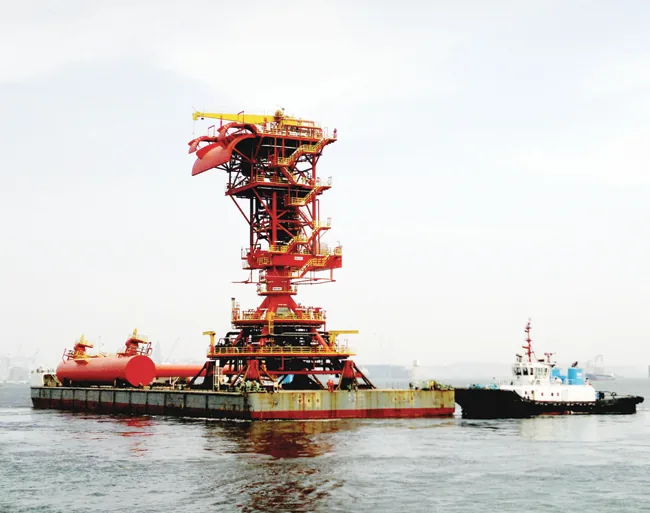
Marine Machinery

Offshore Equipment

Port Machinery

Hydraulic Equipment
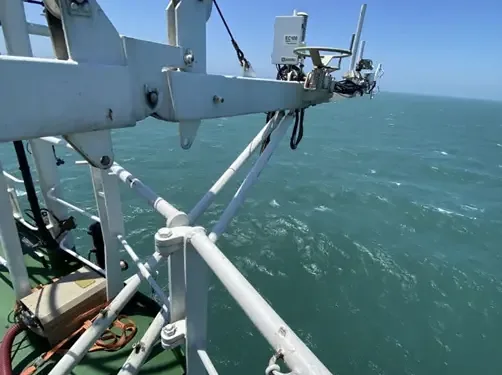
Coastal & Outdoor Equipment
How to Select a Bushing for Salt Water Applications
Start with the operating conditions rather than the bushing material alone.
Load
Determine the radial and axial loads acting on the bearing.
Movement
Identify whether the bushing will operate under rotary, oscillating or linear movement.
Speed
Consider sliding speed and the frequency of movement.
Water Exposure
Specify salt spray, splash, intermittent immersion or continuous immersion.
Temperature
Check the operating temperature range, including any temperature peaks.
Shaft Condition
Shaft material, hardness, surface finish and counterface condition affect bearing performance.
Dimensions
Provide the required inside diameter, outside diameter and length, or the existing bushing.
Salt Water Resistant Bushing FAQ
What is a salt water resistant bushing?
A salt water resistant bushing is designed for applications where the bearing may be exposed to salt water, seawater or salt spray. The suitable construction depends on the bearing material, design and actual operating conditions.
Can PTFE composite bushings be used in salt water?
PTFE composite bushings can be considered for applications involving wet or salt-water exposure, particularly where low friction and self-lubricating operation are required. The complete bearing construction and operating conditions should be reviewed before selection.
Are solid lubricated bronze bushings suitable for marine applications?
Solid lubricated bronze bushings can be used in demanding applications where high loads, low speeds or oscillating movement are involved. Suitability for a specific marine application depends on the bronze alloy, lubricant configuration and operating conditions.
Do salt water resistant bushings need grease?
Not necessarily. Some self-lubricating bushing designs are intended to operate with little or no external lubrication. Whether additional grease is required depends on the bearing construction and application conditions.
What is the difference between seawater resistant and water-lubricated bushings?
Seawater resistant refers to the ability of a bearing system to operate in an environment where seawater is present. Water-lubricated bearings are specifically designed to use water as part of the lubrication system. They are different design requirements.
What information do you need to recommend a bushing?
The most useful information includes bushing dimensions, load, speed, movement type, operating temperature, water exposure and shaft conditions. A drawing or existing bushing sample can also help us identify a suitable replacement.
Need a Bushing for a Salt Water Application?
Tell us about your operating conditions and we can help you evaluate the suitable bearing construction. Send us the bushing dimensions, load, speed, movement type and water exposure conditions. A drawing or existing part number is also welcome.
Send an Inquiry