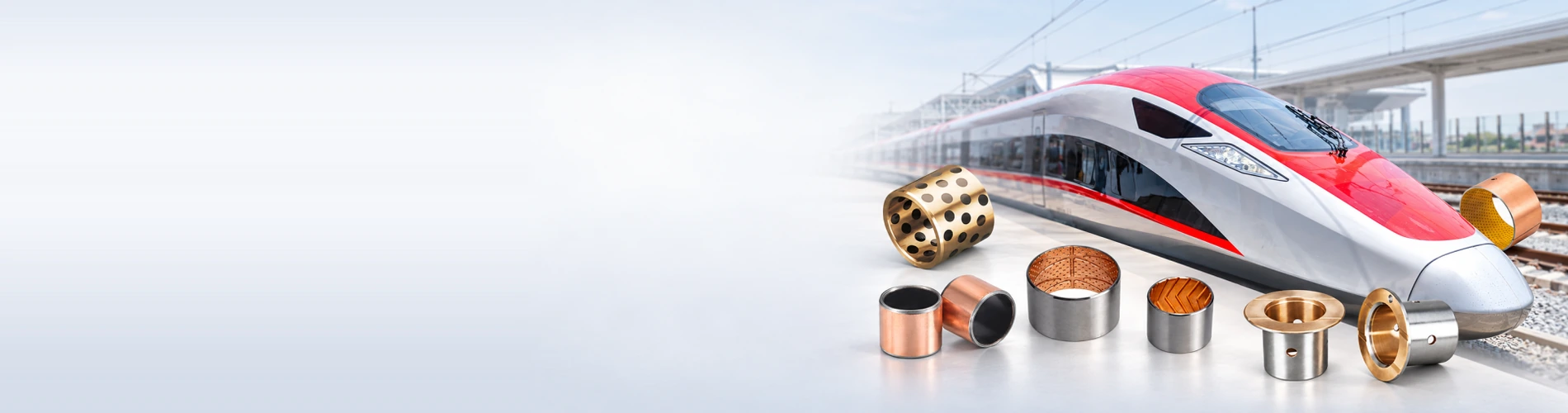
Railway Bushings and Train Bushings for Rail Suspension and Door Pivots
Railway bushings and train bushings for suspension, linkage, doors and other moving joints on a rail vehicle, exposed to load, vibration and repeated movement. Made to drawing or sample.
Where Are Bushings Used in Rail Vehicles?
Rail vehicles have many moving joints, in the suspension, the brake linkage, the doors and the coupling, where railway bushings and train bushings carry load between shafts, pins and housings while still allowing controlled movement.
The exact position affects the bushing design, the material and the load it has to carry.
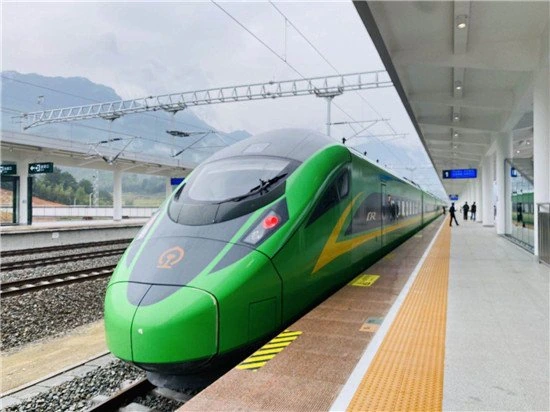
Suspension & Bogie
Rail suspension bushings are used in moving connections around the bogie and suspension system.
Typical positions include:
- Anti-roll bar connections
- Friction damper joints
- King pins
- Center pivots
- Side bearer components
These positions can experience high loads, vibration and repeated oscillating movement.
Brake & Linkage
Bushings are used around pivoting connections in brake and linkage systems.
The bushing helps control movement between pins and surrounding components in the linkage while limiting wear at the joint.
Pantograph & Current Collection
Pantograph mechanisms contain several moving joints that need controlled and repeatable movement.
Bushings may be used at hinge points and other pivoting connections. The operating environment can also expose these positions to vibration, weather and contamination.
Railway Doors & Passenger Access
Railway door bushings can be found in door hinges, sliding guides and other moving parts of the door mechanism.
Other passenger-access equipment may also contain bushings, including ramps, barriers and interior hinges.
Coupling & Car Connections
Bushings can also be used in coupling mechanisms and other connections between rail vehicles, where the load passes from one car to the next.
These positions may experience load, shock and repeated oscillating movement.
Different Railway Positions Need Different Bushing Designs
A train may contain many rail bushings, but they do not all work in the same way.
A bushing in a bogie suspension joint has very different requirements from one in a train door.
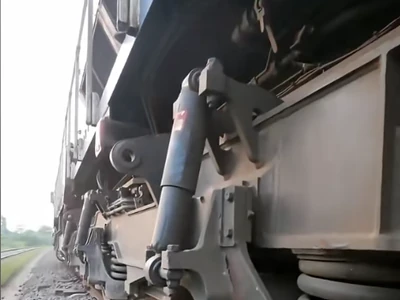
Bogie & Suspension
Railway suspension bushings at the bogie may need to handle high load, vibration and repeated oscillating movement.

Brake Linkage
A brake linkage joint needs controlled movement and stable clearance under load through repeated operating cycles.
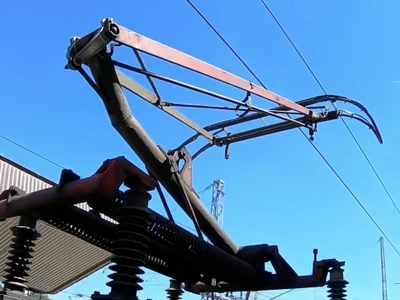
Pantograph
The bushing must allow smooth movement while dealing with vibration, shock and possible misalignment. Electrical insulation can also be important depending on the design.

Train Door
Train door bushings in that mechanism may cycle many times every day, so low friction, smooth movement and limited maintenance can become more important than high load capacity.

Coupling
The coupling linkage joint can experience high loads, shock and repeated sliding movement between connected vehicles.
This is why the selection of rail bushings should start with the installation position and working conditions, with the load and the movement at the joint, rather than the train model or bushing dimensions alone.
What Usually Goes Wrong at the Bushing Position?
When railway suspension bushings or train bushings wear earlier than expected under load, the bushing itself is not always the only problem.
The complete bearing position should be checked.
Excessive Clearance
Wear between the bushing and shaft or pin opens the clearance, so the load lands on a smaller area than the mechanism was designed to allow.
This may affect the accuracy of a linkage or create impact at the joint.
Uneven Wear
If the shaft, pin or housing is misaligned, the load may concentrate on one side of the bushing.
The result can be uneven wear and a much shorter service life.
Shaft or Pin Damage
A worn or scored shaft can damage a replacement bushing quickly, because the load no longer spreads evenly across the bore.
Replacing the bushing without checking the mating surface may simply repeat the same failure.
Lubrication Problems
A lubricated bushing may perform poorly if grease cannot reach the load zone or the maintenance point is difficult to access.
Contamination around the joint can also affect the service life.
Repeated Vibration
Vibration and impact can accelerate wear in joints that move repeatedly under load.
The problem may first appear as noise, increasing clearance or visible wear before the bushing becomes completely unusable.
A replacement should address the condition that caused the original failure, not just match the old dimensions.
Railway Bushing Selection by Application
There is no single railway bushing construction that is suitable for every position, from a greased sliding pivot under light load to a brake linkage joint under high load.
The following is a starting point for matching the application with the GLARY product series.
| Railway application | Main working condition | Suitable GLARY bushing series |
|---|---|---|
| Bogie & suspension | High load, vibration, oscillating movement | Composite / Solid Lubricated / Bimetal |
| Anti-roll bar | Repeated oscillation and load | Composite / Solid Lubricated / Bimetal |
| Brake linkage | Repeated oscillation, wear and clearance control | Composite / Solid Lubricated / Bimetal |
| King pin / center pivot | High load, rotation or oscillation | Composite / Solid Lubricated / Bimetal |
| Coupling joints | Load, shock and oscillating movement | Composite / Solid Lubricated / Bimetal |
| Pantograph | Low friction, vibration, shock and misalignment | Composite |
| Current collector | Repeated movement and outdoor exposure | Composite / Solid Lubricated |
| Railway door mechanism | Frequent movement, low friction, limited maintenance | Composite / Sintered |
| Door hinge / guide | Sliding or pivoting movement | Composite / Sintered |
| Simple lubricated pivot | Low speed, grease lubrication | Bronze Wrapped |
These combinations are a starting point, not a substitute for application review.
Final selection should consider the actual load, movement, shaft condition, lubrication, temperature, mounting arrangement and required service life.
Railway Door Bushings: A Different Maintenance Problem
Train doors operate repeatedly during normal service, and train door bushings at the hinge, the sliding guide and the door linkage need to maintain smooth movement through many operating cycles, under a much lighter load than a bogie pivot carries.
The challenge is not only wear.
A door mechanism may also be affected by:
- Dust and dirt around sliding or pivoting parts
- Grease attracting contamination
- Increasing friction
- Noise
- Uneven or difficult door movement
- Limited maintenance access
In one high-speed train door application, dry-running plain bearings were used to provide smooth movement while reducing maintenance and resistance to dust and dirt.
This type of application shows why a railway door bushing should be evaluated as part of the complete door mechanism.
The important question is not simply:
What size bushing is installed now?
It is also:
Does the current bushing construction suit the way this door actually operates?
For frequently operated doors under a light load, a dry-running solution may be worth considering when regular lubrication is difficult or contamination is a concern.
What Do We Need to Check Before Supplying a Replacement?
If you are replacing railway bushings, the original part number is useful, but the load, the movement and the condition of the shaft matter just as much for a proper application review.
Bushing Dimensions
Please provide:
- Inside diameter
- Outside diameter
- Length
- Flange dimensions, if applicable
Shaft or Pin
If possible, provide:
- Shaft or pin diameter
- Material
- Surface condition
- Visible wear or scoring
Operating Conditions
Useful information includes:
- Load
- Movement type
- Speed or operating frequency
- Temperature
- Lubrication condition
Installation
Tell us where the part is installed:
- Bogie
- Suspension
- Brake linkage
- Pantograph
- Door mechanism
- Coupling
- Other railway equipment
A drawing, sample or clear photos can also help.
Previous Failure
If the previous bushing did not last as expected, tell us what happened.
For example:
- Excessive clearance
- Uneven wear
- Cracking
- Seizure
- Noise
- Shaft damage
- Short service life
Send your railway bushing and train bushing requirements
Tell us whether the joint sits in a suspension linkage, a brake linkage, a coupling or a door mechanism, and what load the part carries and what sliding movement it makes. A drawing, a sample or a set of dimensions is enough to start.
Send an InquiryThis information allows us to review the application rather than simply matching dimensions.
FAQ
Can you make railway bushings from an existing drawing?
Yes. An existing drawing is a useful starting point for checking dimensions, tolerances, material and mounting requirements.
If the original design has been in service for some time, application conditions can also be reviewed before making a replacement.
Can you supply a replacement if we only have a sample?
Yes. A physical sample can be used to check the basic dimensions and construction.
Photos of the installed position are also helpful because the same bushing dimensions can be used in very different applications.
Can you manufacture non-standard railway bushing sizes?
Yes. Railway equipment often uses application-specific dimensions rather than standard catalogue sizes.
For non-standard parts, a drawing, sample or dimensional specification can be used to confirm the manufacturing requirements.
Can you help identify an unknown bushing material?
We can review the available information, including the part construction, dimensions, application and previous service conditions.
If the original material is unknown, the operating conditions are especially important when considering a replacement.
Do you need the original part number?
No.
A part number is useful, but it is not essential. A drawing, sample or dimensional information can be enough to start the review.
For a replacement, knowing where the bushing is installed and how it operates is also valuable.
Can one bushing design replace another material type?
Not automatically.
Two bushings can have the same dimensions but different load capacity, friction characteristics, lubrication requirements and allowable operating conditions.
Any material or construction change should therefore be checked against the actual application before replacement.
Do you support small trial orders before regular supply?
Trial quantities can be discussed for new applications or replacement projects.
The appropriate quantity depends on the bushing specification, production requirements and whether the part is a standard or custom design.
What should I send if I am not sure which GLARY product to choose?
Send the bushing drawing or dimensions together with the installation position and basic operating conditions.
If possible, include:
- Load
- Movement
- Lubrication
- Temperature
- Shaft or pin information
- Photos of the installation
- Photos of the failed bushing
We can then review the application and narrow down the suitable bushing series.
Need a Railway Bushing for a Specific Application?
Send us the drawing, sample or application details.
Whether you need a bushing for a rail suspension system, brake linkage, coupling, pantograph or train door, the installation conditions are the starting point for selecting the right construction.
Send the position and the operating conditions
Railway bushings, train bushings, rail suspension bushings and railway door bushings are quoted from the position on the rail vehicle, the load at the joint and the sliding movement it makes.
Send an InquiryNeed Self-Lubricating Bearings?
Contact GLARY for bearing solutions and pricing.