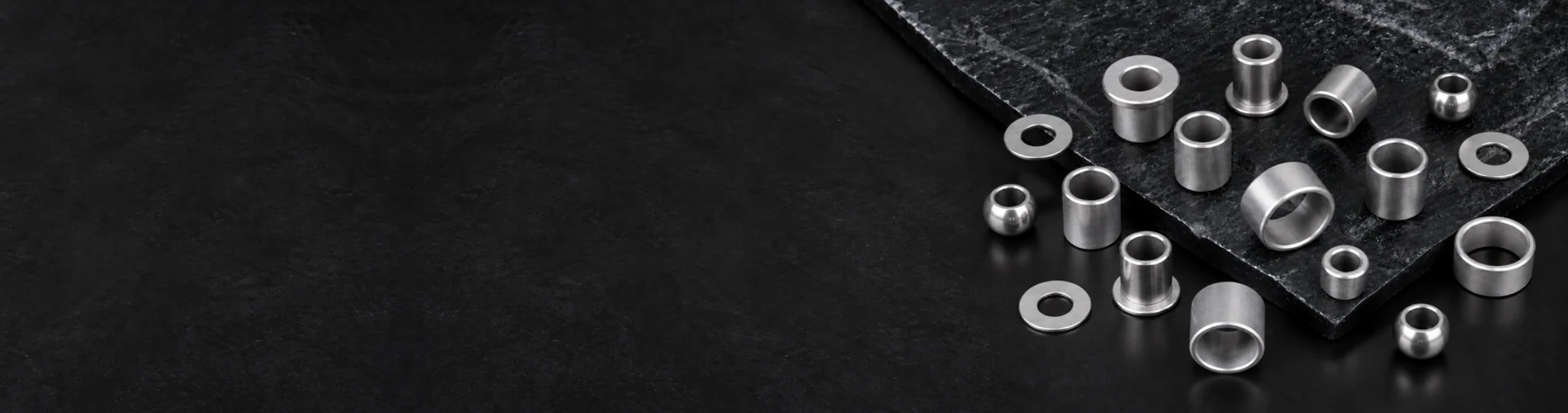
Sintered Iron Bushings
Oil-impregnated iron bushings for rotating shafts and mechanical assemblies. Standard sizes are available, with custom bushings made to your drawings.
When Are Sintered Iron Bushings a Suitable Choice?
Sintered iron bushings are made from porous iron-based material produced through powder metallurgy. The pores can retain lubricating oil, allowing oil to reach the sliding surface during operation.
This structure makes oil impregnated iron bushings an option for mechanical assemblies where a compact bearing, an oil-retaining structure and reduced routine lubrication are required.
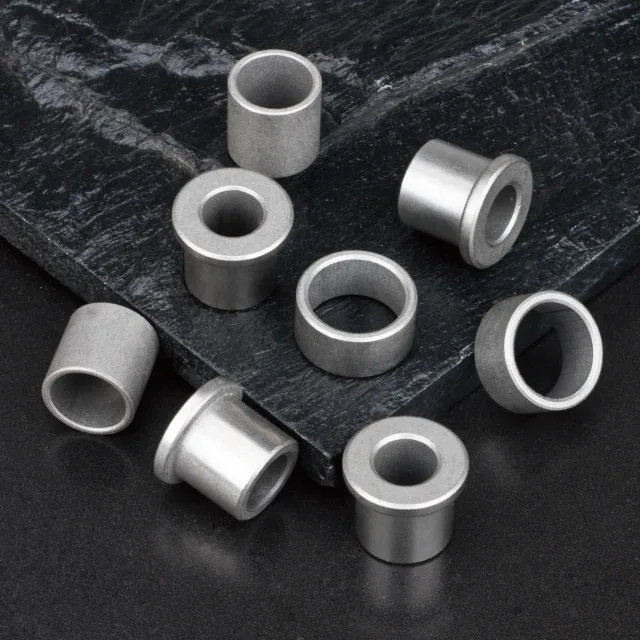
They may be worth considering when:
- A shaft rotates continuously or intermittently inside a fixed housing.
- The design calls for a self-lubricating or oil-impregnated bearing.
- Space is limited and a compact sleeve bearing is preferred.
- The equipment needs a repeatable bearing size for series production.
- The existing design uses an iron-based sintered bushing and requires a replacement.
However, an oil-impregnated structure does not mean that every application can run without further maintenance. Bearing suitability depends on the load, speed, temperature, shaft surface, clearance and operating environment. These conditions should be reviewed before selecting a material.
How Oil-Impregnated Sintered Iron Bushings Work
Unlike a solid metal sleeve, powder metallurgy iron bushes contain a network of pores formed during manufacturing. After impregnation, these pores hold lubricating oil within the material.
As the shaft moves against the bushing, operating conditions can help oil reach the sliding interface. The oil supports lubrication between the shaft and the bearing surface and can help reduce direct metal-to-metal contact.
The result depends on the design and operating conditions. Oil retention alone does not establish a sintered iron bearing's load capacity, friction level or service life.
When reviewing an application, it is useful to check:
- Movement: Is the shaft rotating continuously, starting and stopping frequently, or oscillating through a limited angle?
- Load: Is the load steady, variable or subject to repeated impact?
- Speed: What is the normal shaft speed, and are there frequent starts or stops?
- Temperature: What are the normal operating temperature and any temperature peaks?
- Lubrication: Will the bushing rely on its impregnated oil, or will the assembly receive additional lubrication?
These details help determine whether oil-impregnated sintered iron bushes are appropriate for the application.
Sintered Iron vs. Sintered Bronze Bushings
Iron-based and bronze-based sintered bushings both use powder metallurgy and can be supplied in oil-impregnated designs. The material choice should be based on the actual operating requirements rather than the material name alone.
| Selection factor | Sintered iron bushings | Sintered bronze bushings |
|---|---|---|
| Base material | Iron-based powder metal | Bronze-based powder metal |
| Lubrication structure | Can retain oil in its pores | Can retain oil in its pores |
| Main selection consideration | Confirm the iron material grade and suitability for the load, speed and environment | Confirm the bronze composition and suitability for the load, speed and environment |
| Corrosion considerations | Check the operating environment and material protection requirements | Check the bronze grade and the specific environment |
| Best way to choose | Compare the actual material specification and operating requirements | Compare the actual material specification and operating requirements |
Neither material is automatically the better choice for every application. Load, speed, temperature, lubrication, corrosion exposure and required service life can change the decision.
If you are replacing an existing bearing, the original material specification is a useful starting point. If you are developing a new assembly, share the operating conditions and housing design so the material can be evaluated against the actual requirements.
For other porous metal bearing options, see our Sintered Bushings product range.
Sintered Iron Bushing Manufacturing Process
Iron-based metal powders are blended and prepared according to the required material composition.

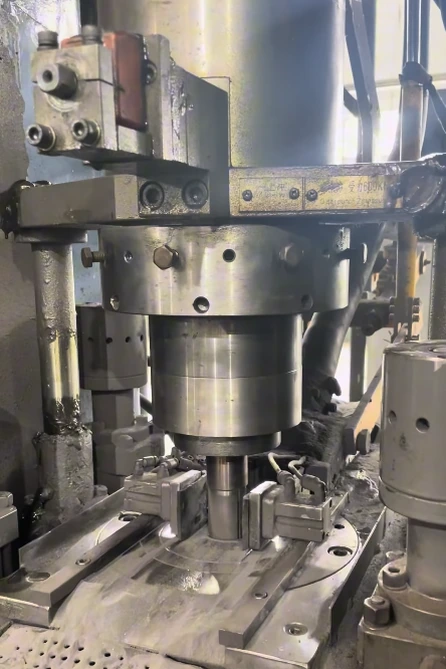
The prepared powder is compressed in precision dies to form components with the required shape and approximate dimensions.

The compacted components are heated in a controlled-atmosphere furnace below the melting point of the base metal, bonding the powder particles to form a porous metal structure.
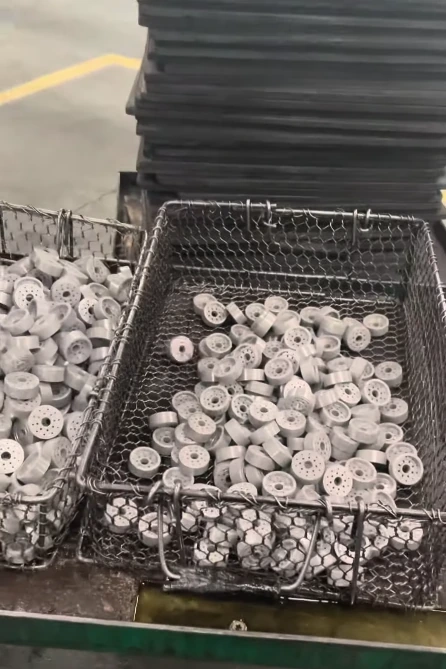
The sintered components are pressed through sizing dies to improve dimensional accuracy and achieve the specified dimensions.
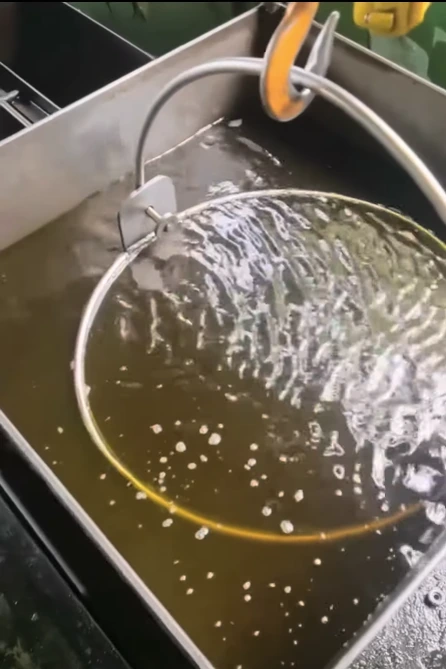
Lubricating oil is introduced into the interconnected pores of the sintered iron structure, providing an internal oil reservoir for self-lubricating operation.

Finished bushings are inspected for dimensional accuracy, appearance and compliance with specified product requirements before delivery.
Where Are Sintered Iron Bushings Used?
Oil-impregnated sintered iron bushings are used in several types of mechanical assemblies. Published product information from sintered bearing suppliers identifies textile machinery, power tools, automotive and motorcycle shock absorbers, and static guide or retaining positions as established application areas.
| Application | Typical position or function | What to check |
|---|---|---|
| Textile machinery | Shaft support in moving mechanical assemblies | Operating speed, duty cycle and lubrication |
| Power tools | Bearing positions supporting rotating shafts | Shaft speed, vibration and operating temperature |
| Automotive and motorcycle shock absorbers | Selected bearing or guide positions within the assembly | Movement, load variation, fit and service requirements |
| Static guide and retaining positions | Guide sleeves or locating components that remain stationary | Dimensional fit, alignment and the function of the assembly |
The exact bearing design depends on the machine and operating conditions. These examples identify potential application areas; they do not mean that one sintered iron bushing specification is suitable for every position.
When requesting a quotation, provide the bushing dimensions and, where possible, the shaft speed, load, temperature and operating cycle. This information helps establish whether sintered iron bearings are appropriate for your application.
Standard Sizes and Custom Sintered Iron Bushings
GLARY offers sintered iron bushings in standard sizes and can also manufacture bushings to customer drawings.
If you are replacing an existing part, provide the inner diameter, outer diameter, length and any available part drawing. For a new design, include the shaft and housing dimensions along with the operating conditions.
| d (F7) | D (s7) | H (js13) |
|---|---|---|
| 3 | 5 | 5.5 |
| 3 | 6 | 2.3 |
| 3 | 6 | 6 |
| 3 | 6 | 12 |
| 3 | 7 | 3 |
| 3 | 7 | 7.4 |
| 3 | 7 | 10.5 |
| 3 | 7 | 11 |
| 3 | 7 | 16 |
| 3 | 7.1 | 20 |
| 4 | 8 | 8 |
| 4 | 8 | 12 |
| 4 | 8 | 15 |
| 4 | 9 | 16 |
| 4 | 10 | 5 |
| 5 | 8 | 3 |
| 5 | 8 | 5 |
| 5 | 9 | 16 |
| 5 | 10 | 8.5 |
| 6 | 9 | 10 |
| 6 | 9 | 11 |
| 6 | 10 | 7.5 |
| 6 | 10 | 8.8 |
| 6 | 10 | 10.5 |
| 6 | 10 | 15.5 |
| 6 | 10 | 16 |
| 6 | 11.2 | 25.4 |
| 6 | 12 | 10 |
| 6 | 12 | 16 |
| 6 | 12 | 22 |
| 6 | 13 | 10 |
| 6 | 13 | 13 |
| 6 | 15 | 14 |
| 7 | 10 | 6 |
| 7 | 10 | 10 |
| 7 | 11 | 6 |
| 7 | 11 | 7 |
| 7 | 11 | 8 |
| 7 | 11 | 10 |
| 7 | 11 | 12 |
| 7 | 13 | 6 |
| 7.5 | 10 | 9.5 |
| 8 | 10 | 7 |
| 8 | 11 | 5.5 |
| 8 | 11 | 7 |
| 8 | 11 | 8 |
| 8 | 11 | 11.8 |
| 8 | 11 | 12 |
| 8 | 11 | 31 |
| 8 | 12 | 5.5 |
| 8 | 12 | 6 |
| 8 | 12 | 7.5 |
| 8 | 12 | 8 |
| 8 | 12 | 8.5 |
| 8 | 12 | 10 |
| 8 | 12 | 11 |
| 8 | 12 | 12 |
| 8 | 12 | 25.5 |
| 8 | 13 | 8 |
| 8 | 13 | 10 |
| 8 | 13 | 12 |
| 8 | 14 | 10 |
| 8 | 14 | 15.5 |
| 8 | 14 | 16 |
| 8 | 15 | 15.5 |
| 8 | 15 | 19 |
| 8 | 15 | 20 |
| 8 | 18 | 6 |
| 8 | 22 | 7 |
| 9 | 12 | 6 |
| 9 | 12 | 7 |
| 9 | 12 | 8 |
| 9 | 13 | 6 |
| 9 | 13 | 7 |
| 9 | 13 | 8 |
| 9 | 13 | 8.9 |
| 9 | 13 | 10 |
| 9 | 14 | 6 |
| 9 | 14 | 7.5 |
| 9 | 14 | 10 |
| 9 | 14 | 12 |
| 9 | 15 | 10.2 |
| 9.5 | 13.3 | 7.8 |
| 10 | 13 | 16 |
| 10 | 13 | 17.5 |
| 10 | 14 | 9 |
| 10 | 14 | 10 |
| 10 | 14 | 11 |
| 10 | 14 | 12 |
| 10 | 14 | 16 |
| 10 | 14 | 17.5 |
| 10 | 14 | 25 |
| 10 | 14 | 25.5 |
| 10 | 14 | 26 |
| 10 | 14 | 31 |
| 10 | 14 | 33 |
| 10 | 14 | 36 |
| 10 | 15 | 12 |
| 10 | 15 | 16 |
| 10 | 15 | 22 |
| 10 | 15 | 25.5 |
| 10 | 16 | 9 |
| 10 | 16 | 10 |
| 10 | 16 | 15 |
| 10 | 19 | 27.5 |
| 10 | 20 | 24 |
| 10 | 20 | 27 |
| 11 | 16 | 5 |
| 11 | 16 | 8 |
| 12 | 15 | 14 |
| 12 | 15 | 20 |
| 12 | 16 | 11 |
| 12 | 16 | 12 |
| 12 | 16 | 12.5 |
| 12 | 16 | 15 |
| 12 | 16 | 16 |
| 12 | 16 | 18 |
| 12 | 16 | 22 |
| 12 | 16 | 29 |
| 12 | 16 | 43 |
| 12 | 17 | 7 |
| 12 | 17 | 9 |
| 12 | 18 | 12 |
| 12 | 18 | 18.5 |
| 12 | 19 | 15.5 |
| 12.2 | 17 | 17.8 |
| 12.7 | 19.1 | 28.5 |
| 12.8 | 17 | 19 |
| 12.8 | 17.7 | 22.2 |
| 14 | 16 | 9 |
| 14 | 18 | 12 |
| 14 | 18 | 14 |
| 14 | 18 | 14.5 |
| 14 | 18 | 17 |
| 14 | 18 | 36 |
| 14 | 20 | 14 |
| 14 | 20 | 15 |
| 14 | 20 | 20 |
| 14 | 22 | 6 |
| 15 | 19 | 9.8 |
| 15 | 19 | 10 |
| 15 | 19 | 15 |
| 15 | 19 | 16 |
| 15 | 20 | 15 |
| 15.9 | 19.1 | 19.1 |
| 15.9 | 25.4 | 3.2 |
| 16 | 20 | 20 |
| 16 | 20 | 25 |
| 16 | 20 | 35 |
| 16 | 22 | 15 |
| 16 | 22 | 16 |
| 16 | 22 | 20 |
| 16 | 22 | 32 |
| 16 | 28 | 63 |
| 16.2 | 22 | 20 |
| 17 | 22 | 20 |
| 17 | 23 | 18 |
| 18 | 22 | 16 |
| 18 | 22 | 18 |
| 18 | 24 | 20 |
| 18 | 25 | 15 |
| 19 | 25 | 30 |
| 19.1 | 23.8 | 21.3 |
| 20 | 24 | 15 |
| 20 | 25 | 13.8 |
| 20 | 25 | 20 |
| 20 | 25 | 25 |
| 20 | 26 | 19 |
| 20 | 28 | 20 |
| 22 | 27 | 28 |
| 22 | 28 | 32 |
| 22 | 29 | 22 |
| 22 | 30 | 32 |
| 23 | 28 | 20 |
| 25 | 28 | 25 |
| 25 | 30 | 20 |
| 25 | 30 | 25 |
| 25 | 30 | 32 |
| 25 | 32 | 20 |
| 25 | 35 | 13.8 |
| 25 | 35 | 41.5 |
| 30 | 35 | 12.8 |
| 30 | 35 | 13.2 |
| 30 | 35 | 13.8 |
| 30 | 38 | 24 |
| 32 | 40 | 40 |
| 32.4 | 40 | 50 |
| 35 | 45 | 25 |
| 40 | 50 | 25 |
| 40 | 50 | 40 |
| d (F8) | D (s8) | H (js13) | h (js13) | D1 (js13) |
|---|---|---|---|---|
| 3 | 7 | 4 | 1.4 | 10 |
| 3 | 8 | 3 | 1.5 | 10 |
| 4 | 7 | 3.5 | 1.5 | 9 |
| 4 | 7 | 5.7 | 4 | 9 |
| 4 | 8 | 4 | 4 | 12 |
| 4 | 8 | 6 | 1.5 | 10 |
| 4.5 | 8 | 12 | 2 | 12 |
| 5 | 8 | 7 | 3.6 | 10 |
| 5 | 8 | 7 | 4 | 12 |
| 5 | 8 | 9.5 | 1.6 | 9.5 |
| 5 | 11 | 15 | 2 | 16 |
| 6 | 10 | 10 | 2 | 14 |
| 6 | 10 | 16 | 2 | 14 |
| 6 | 10 | 21 | 2.7 | 14.5 |
| 6 | 10 | 27 | 2 | 15 |
| 6 | 11 | 21.5 | 5 | 8.5 |
| 6 | 12 | 6.2 | 2.3 | 8 |
| 6 | 12 | 7 | 3 | 16 |
| 6 | 12 | 20 | 2 | 16 |
| 6 | 12 | 20 | 18 | 14.5 |
| 6 | 12 | 23 | 3 | 16 |
| 6 | 15 | 6 | 3 | 17 |
| 7 | 10 | 3.7 | 2.4 | 12 |
| 7 | 10 | 5.3 | 3.8 | 12 |
| 7 | 11 | 12.5 | 1.5 | 14.4 |
| 7 | 11 | 12.5 | 1.8 | 14.4 |
| 7 | 11 | 18 | 5.2 | 14 |
| 7 | 12 | 8 | 5 | 14 |
| 7 | 13 | 18 | 2 | 16 |
| 7 | 17 | 8 | 2 | 20 |
| 7 | 20 | 7 | 3 | 22 |
| 8 | 11 | 9 | 1.5 | 15 |
| 8 | 12 | 4.2 | 1.7 | 10 |
| 8 | 12 | 8 | 2 | 14 |
| 8 | 12 | 10 | 2 | 16 |
| 8 | 12 | 12 | 2 | 16 |
| 8 | 12 | 14 | 2 | 16 |
| 8 | 13 | 9 | 2 | 14 |
| 8 | 13 | 10 | 2 | 18 |
| 8 | 13 | 11 | 2 | 16.3 |
| 8 | 13 | 11 | 2.1 | 16 |
| 8 | 13 | 14 | 3 | 14 |
| 8 | 13 | 16 | 2 | 16.2 |
| 8 | 14 | 17 | 2.5 | 18 |
| 8 | 14.9 | 5.7 | 1.7 | 10 |
| 8 | 15 | 15.5 | 2 | 17.5 |
| 8 | 16 | 40 | 12.5 | 18 |
| 8 | 16 | 42 | 2 | 20 |
| 9 | 15 | 8 | 2 | 19 |
| 10 | 14 | 10 | 1.5 | 16 |
| 10 | 14 | 14 | 2 | 17 |
| 10 | 14 | 14 | 2 | 20 |
| 10 | 14 | 14 | 2.5 | 19 |
| 10 | 14 | 16 | 2 | 15.2 |
| 10 | 15 | 12 | 1.5 | 19 |
| 10 | 15 | 13 | 2 | 22 |
| 10 | 16 | 8 | 3 | 22 |
| 10 | 16 | 9.5 | 2 | 22 |
| 10 | 16 | 12.8 | 2.8 | 22 |
| 10 | 16 | 14 | 1.5 | 19 |
| 10 | 17 | 12 | 3 | 19 |
| 10 | 17 | 13 | 4 | 19 |
| 10 | 18 | 14 | 3 | 19 |
| 12 | 16 | 8 | 3 | 22 |
| 12 | 16 | 14 | 2 | 20 |
| 12 | 17 | 8 | 2 | 19 |
| 12 | 17 | 10 | 2 | 22 |
| 12 | 17 | 12 | 2.5 | 22 |
| 12 | 17 | 13 | 2 | 20 |
| 12 | 17 | 14 | 2 | 20 |
| 12 | 17 | 16 | 2.5 | 22 |
| 12 | 17 | 18 | 2 | 19 |
| 12 | 17 | 20 | 2.5 | 22 |
| 12 | 18 | 8 | 3 | 22 |
| 12 | 18 | 15 | 2 | 21.5 |
| 12 | 18 | 18 | 4.5 | 22 |
| 12 | 20 | 17 | 4 | 21 |
| 12.1 | 16 | 12 | 3 | 24 |
| 14 | 20 | 8 | 3 | 26 |
| 14 | 20 | 14 | 3 | 26 |
| 14 | 20 | 22 | 3 | 26 |
| 15 | 19 | 16 | 2 | 23 |
| 15 | 20 | 17 | 2.5 | 24 |
| 15 | 22 | 12 | 3 | 30 |
| 16 | 20 | 12 | 2.5 | 25 |
| 16 | 20 | 20 | 2 | 24 |
| 16 | 22 | 16 | 3 | 28 |
| 16 | 22 | 18 | 2 | 25 |
| 16 | 24 | 12 | 3 | 30 |
| 16.2 | 22 | 16 | 3 | 28 |
| 16.2 | 22 | 25 | 3 | 28 |
| 17 | 20 | 14 | 1.8 | 25.4 |
| 18 | 22 | 18 | 2 | 26 |
| 19 | 25 | 30 | 3 | 29 |
| 20 | 26 | 20 | 3 | 32 |
| 22 | 27 | 22 | 2.5 | 32 |
| 25 | 30 | 20 | 2.5 | 35 |
| 25 | 30 | 37 | 2.5 | 35 |
| 25 | 32 | 32 | 3.5 | 39 |
| 28 | 35 | 20 | 2.5 | 38 |
| 28 | 36 | 36 | 4 | 44 |
| 32 | 40 | 32 | 4 | 48 |
| 40 | 50 | 40 | 5 | 60 |
| d (F7) | D (s7) | H (js13) |
|---|---|---|
| 1 | 4 | 3 |
| 2 | 4 | 2 |
| 2 | 5 | 2.5 |
| 2 | 6 | 4 |
| 3 | 8 | 6 |
| 3 | 12 | 9.5 |
| 4 | 8 | 5.5 |
| 4 | 8 | 5.8 |
| 4 | 9 | 5 |
| 4 | 9 | 6 |
| 4 | 10 | 7 |
| 4 | 11 | 7 |
| 4 | 12 | 7 |
| 5 | 10 | 7 |
| 5 | 10 | 8 |
| 5 | 11 | 7 |
| 5 | 12 | 7 |
| 5 | 12 | 8 |
| 6 | 10 | 6.2 |
| 6 | 11 | 7 |
| 6 | 12 | 7 |
| 6 | 12 | 8 |
| 6 | 12 | 9 |
| 6 | 13 | 8 |
| 6 | 14 | 10 |
| 6 | 15 | 11.5 |
| 7 | 12 | 9 |
| 7 | 14 | 10 |
| 7 | 16 | 9 |
| 7 | 16 | 10 |
| 7 | 16 | 11 |
| 8 | 13 | 7 |
| 8 | 13 | 8 |
| 8 | 15 | 7.2 |
| 8 | 15 | 9 |
| 8 | 16 | 11 |
| 8 | 17 | 11 |
| 8 | 18 | 11 |
| 8 | 18 | 13 |
| 9 | 16 | 10 |
| 9 | 16 | 11 |
| 9 | 17 | 11.4 |
| 9 | 20 | 15 |
| 9 | 21 | 12 |
| 10 | 16 | 11 |
| 10 | 18 | 12 |
| 10 | 18 | 13 |
| 10 | 20 | 14 |
| 10 | 21 | 12 |
| 12 | 22 | 14 |
| 12 | 22 | 15 |
- Thrust washers are supplied to your drawing or sample, so the bore, the outside diameter and the thickness follow the application.
- Send the bore, the outside diameter, the thickness, the axial load and the available installation space, and we will quote against them.
To help us review your requirements, please provide:
| Information | What to provide |
|---|---|
| Dimensions | Inner diameter, outer diameter and length |
| Operating load | Radial load and any changes during operation |
| Speed | Rotational speed or oscillation frequency |
| Temperature | Normal operating temperature and temperature peaks |
| Lubrication | Required oil impregnation and any additional lubrication |
| Quantity | Sample quantity and estimated production volume |
| Drawing | Technical drawing with dimensions and tolerances, if available |
Standard sizes, dimensional tolerances and material specifications can be confirmed against the applicable product data.
Custom Iron Powder Metallurgy Parts

In addition to sintered iron bushings and thrust washers, GLARY can supply other iron-based powder metallurgy components to customer drawings.
If your project requires a custom iron sintered part for a mechanical assembly, send us the technical drawing, material requirements, dimensions and estimated order quantity. We can review your specifications and discuss manufacturing options.
Standard components and drawing-based custom parts can be evaluated according to the required geometry and application.
What to Check Before Ordering
A sintered iron bushing may have the correct nominal dimensions and still be unsuitable for the application. The following checks help reduce the risk of selecting a replacement that does not perform as required.
Confirm the shaft and housing fit
Check the shaft diameter, housing bore, bushing length and required fit. If the assembly uses a press fit, the installation method and dimensional tolerances also matter.
Identify the actual movement
Continuous rotation, intermittent rotation and oscillating movement place different demands on a bearing. Describe how the shaft moves instead of providing speed alone.
Review the load and operating cycle
A steady radial load is different from a load that changes direction or includes repeated shocks. Include the normal load and any unusual operating events when sharing application details.
Confirm the lubrication arrangement
An oil-impregnated bushing retains oil within its porous structure, but the application still needs to be checked for temperature, operating cycle and any requirement for additional lubrication.
Check the surrounding environment
Dust, moisture, chemicals and temperature changes can affect material selection and service life. Mention any unusual exposure before confirming the specification.
Compare the replacement specification
For an existing assembly, compare the original material, dimensions, tolerances and lubrication arrangement. A similar-looking bushing is not necessarily a direct replacement.
Frequently Asked Questions
Can I order sintered iron bushings to my own drawing?
Yes. GLARY offers standard sizes and can manufacture custom bushings to customer drawings. Provide the dimensions, tolerances and available operating information so the requirements can be reviewed.
What is the difference between a sintered iron bushing and a solid iron sleeve?
A sintered iron bushing is made from porous powder metal. In an oil-impregnated version, the pores retain lubricating oil. A conventional solid sleeve does not have the same porous oil-retaining structure. The appropriate design depends on the application and material specification.
Can I replace a sintered bronze bushing with an iron bushing?
Not automatically. The two materials may differ in mechanical properties, corrosion behavior and suitability for particular operating conditions. Before changing materials, check the original specification, load, speed, lubrication and environment.
What information is needed for a quotation?
For a standard part, provide the required size and quantity. For a custom part, a technical drawing with dimensions and tolerances is helpful. If available, also include the load, speed, temperature and lubrication requirements.
How can I check whether the bushing is suitable for my operating conditions?
Share the shaft and housing dimensions, movement type, load, speed, temperature and operating environment. These details provide a starting point for reviewing the bushing specification. Suitability should be confirmed against the applicable product data rather than inferred from the material name alone.
Request a Quote for Sintered Iron Bushings
Whether you need a standard-size oil-impregnated sintered iron bushing or a custom part made to drawing, GLARY can review your dimensional and application requirements.
Send us your drawing, specifications and estimated quantity to discuss the appropriate product and request a quotation.