
Mold Components Bushings: Injection Mold Bushings and Mold Guide Bushings for Tooling
Mold bushings control the movement between guide pins, plates and the other moving parts of a tool. Injection mold bushings and mold guide bushings hold alignment, keep wear down and avoid maintenance nobody scheduled.
Where Are Bushings Used in Mold Components?
In a mold or a die, bushings sit wherever one component has to guide, slide or reciprocate against another. A cylindrical bushing can support a guide pin or other moving component, depending on the mold design and installation. Mold guide bushings, guide pin bushings, ejector bushings, die bushings and punch bushings each serve a specific position, with different requirements for load, movement and alignment.
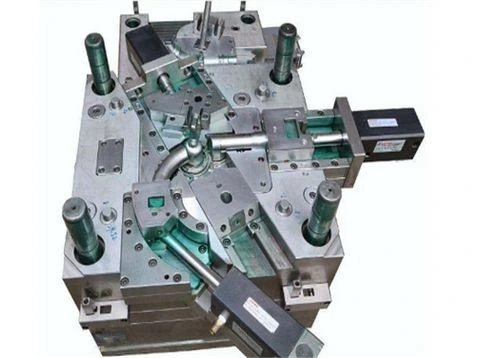
Mold guide bushings
Guide bushings work with the guide pin to control the position of the mold halves during opening and closing. They hold alignment between the mold plates and keep metal from running directly on metal around the pin.
Mold ejector bushings
Mold ejector bushings carry the ejector system as the ejector plate travels back and forth. They have to hold alignment through repeated reciprocating movement without the clearance between pin and bushing opening up.
Mold guide pin bushings
Mold guide pin bushings provide the sliding surface around the guide pin. They matter most on a mold that opens and closes thousands of times, because wear at that interface widens the clearance and the guide system loses accuracy.
Die guide bushings
In a stamping die, die guide bushings work with the guide post to keep the die components aligned through reciprocation. The guide system has to take the repeated movement and still hold the upper and lower halves in position.
Punch guide bushings
Punch and guide systems have a different requirement from a simple rotating bearing. Punch guide bushings have to control the movement of the punch or guide component and limit unwanted side movement during repeated strokes.
What Problem Is the Bushing Actually Solving?
A mold bushing is fitted to control the relationship between two moving components rather than to make a pin travel smoothly on its own.
On opening and closing, the guide pin and its bushing work together on a limited clearance. Once that clearance grows, the guide system can no longer control movement the way it did when the tool was new.
An ejector system works the same way. The ejector plate moves on every cycle, and an ejector guide bushing that wears unevenly leaves the plate travelling roughly and out of line with the rest of the mechanism.
A stamping die puts a different demand on the same parts. The guide post and the guide bushing have to control movement and resist wear from repeated reciprocation, and a punch guide has to limit unwanted side movement during those strokes.
The pin diameter is the starting point. What decides the part is how much movement, load, speed, lubrication and clearance the bushing will see in service.
What Happens When Mold Guide Bushings Wear?
Bushing wear is usually gradual, and a mold will often keep running after the guide system has started to deteriorate. The signs below are the ones to check on guide pin bushings, ejector bushings and die bushings.
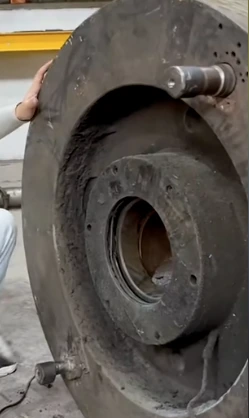
Typical signs
- increasing clearance around the guide pin
- visible scoring or wear marks
- uneven contact on the bushing surface
- abnormal noise during opening or closing
- rough movement of the ejector plate
- inconsistent alignment
- accelerated wear on the guide pin
A worn bushing is not automatically the cause of every alignment problem. Check the guide pin, the bushing bore, the mounting hole, the plate condition and the alignment together.
If only the bushing is replaced while the guide pin or the housing is already worn, the new part may not solve the problem. The same check applies to a worn ejector pin or a scored guide post.
What Does Excessive Clearance Cost You?
Clearance is necessary. A guide pin cannot run through a bushing with none, but too much clearance is a different problem.
As clearance grows, the guide pin is free to move sideways inside the bushing, and that movement can gradually affect the relationship between the mold plates and the other guided components.
For a mold guide system, this can mean:
- less precise mold alignment
- uneven wear
- greater load on the guide system
- damage to mating components
- shorter service life from the replacement bushing
On an ejector system, excess clearance changes the way the ejector plate is guided through its stroke.
That is why replacing worn mold bushings on their outside dimensions alone is a risk. The condition of the mating pin and the running clearance matter just as much.
Which Bushing Fits Which Mold Component?
Different positions in a mold do not call for the same bushing material. Injection mold bushings, guide pin bushings, ejector bushings and die bushings each see a different movement, from opening and closing through to continuous reciprocation.
| Mold component | Typical movement | Main concern | Suitable GLARY series |
|---|---|---|---|
| Mold guide pin & guide bushing | Opening / closing | Alignment, friction, wear | Composite Bushings |
| Mold guide pin & guide bushing | Repeated movement | Low friction, maintenance | Solid Lubricated Bearings |
| Ejector guide pin & bushing | Reciprocating | Alignment, repeated wear | Composite / Solid Lubricated |
| Ejector guide, compact position | Reciprocating | Space, speed, lubrication | Sintered Bushings |
| Heavy-load mold slide / guide | Sliding / oscillating | Load and wear | Bimetal Bearings / Solid Lubricated |
| Stamping die guide post | Reciprocating | Alignment, wear | Composite / Solid Lubricated |
| Punch guide system | Reciprocating | Clearance, wear | Composite / Solid Lubricated |
| Lubricated die mechanism | Sliding / oscillating | Load, lubrication | Bronze Wrapped Bushings |
Choosing the Bushing by Operating Condition
When dry running is important
Where regular grease application is inconvenient, a self-lubricating bushing simplifies maintenance. Composite bushings and solid lubricated bearings are the two options to start with on injection mold bushings. For grease-free positions, see maintenance free bushings.
Plain bearings suit sliding, rotating, oscillating and reciprocating motion, and the range covers metal-polymer and solid-lubricated designs.
When the load is high
A heavily loaded mold slide or die guide needs more than low friction. The bearing material has to carry the contact pressure and resist wear at that pressure.
Bimetal bearings or solid lubricated bearings are the two candidates, depending on whether the application can take external lubrication.
When the movement is repeated
Ejector systems and die guide systems are not one-time movements. They repeat the same stroke over and over, and the ejector pin and its guide see it on every cycle, so compare these before you choose:
- load per bushing
- stroke length
- cycle frequency
- shaft or pin hardness
- running clearance
- lubrication
- temperature
A bushing that behaves well on a lightly loaded guide pin can be the wrong part for a heavily loaded sliding mechanism.
When external lubrication is available
Where grease or oil can be supplied reliably, bronze wrapped bushings can be considered for suitable sliding and oscillating positions.
The decision should be based on the lubrication method and the maintenance routine rather than the material name alone.
When space or speed is the limiting factor
Sintered bushings suit an oil-impregnated bearing in the right movement and installation conditions.
They are not the default for every mold guide.
How Do You Know the Bushing Is the Real Problem?
Before ordering replacement mold bushings, check the whole guide system.
Check the guide pin
Look for:
- scoring
- uneven wear
- surface damage
- diameter loss
- discoloration from friction or heat
A new bushing on a badly worn guide pin can open the clearance again quickly.
Check the bushing
Measure the bore instead of judging it by eye.
Compare the measured dimension with the original specification and with the condition of the mating guide pin.
Check the housing
The mounting hole matters as well.
A housing that is worn, damaged or no longer concentric may mean the bushing alone does not restore alignment.
Check the plates
For an ejector system, inspect the ejector plate, the ejector pins, the backup plate and the mold plate too.
Some ejector guide bushing installations need accurate machining and alignment between the bushing hole and the backup plate. No bushing accuracy compensates for an installation that is out of line.
What Should You Confirm Before Ordering?
A message that reads "Please quote 100 mold bushings" leaves a supplier guessing.
For a replacement or a new mold design, collect the information below first.
Basic dimensions
- Inside diameter
- Outside diameter
- Length
- Flange dimensions, if applicable
- Installation method
Mating part
- Guide pin diameter
- Guide post diameter
- Shaft material
- Surface hardness
- Surface finish
Movement
- Sliding, oscillating or reciprocating
- Stroke length
- Cycle frequency
- Approximate sliding speed
Load
- Radial load
- Impact load
- Static load
- Load direction
Working conditions
- Dry or lubricated
- Grease or oil available
- Working temperature
- Dust or contamination
- Installation space
Those details make it much easier to decide whether a composite bushing, a bimetal bearing, a solid lubricated bearing, a sintered bushing or a bronze wrapped bushing is appropriate.
A Practical Way to Select Mold Bushings
If you are replacing an existing bushing, start from the failure and work back to the material.
The bushing wears too quickly
Check these in order before choosing a harder material:
The mold needs less maintenance
Look at dry-running composite bushings or solid lubricated bearings where the operating conditions allow them.
The guide system carries high load
Compare bimetal bearings with solid lubricated bearings on load, lubrication and movement.
The ejector system has repeated movement
Work on alignment, reciprocating motion, clearance and wear together, instead of picking a bushing by nominal diameter.
The die already has a lubrication system
A bronze wrapped bushing is worth considering for a guide or sliding position that suits it.
That approach avoids picking a bushing because the catalogue description sounds right.
GLARY Mold Component Bushing Solutions
GLARY supplies injection mold bushings, mold guide bushings, guide pin bushings, ejector bushings, die bushings and punch bushings from five plain bearing series, each one for a different set of operating conditions:
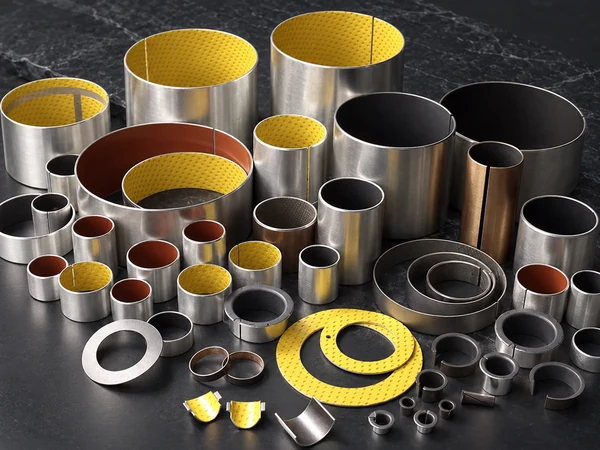
Composite Bushings
For low-friction, dry-running applications.View Composite Bushings
Bimetal Bearings
For demanding load conditions.View Bimetal Bearings
Solid Lubricated Bearings
For dry sliding, oscillating and reciprocating applications.View Solid Lubricated Bearings
Sintered Bushings
For suitable oil-impregnated bearing applications.View Sintered Bushings
Bronze Wrapped Bushings
For applications using external lubrication.View Bronze Wrapped BushingsThe right choice depends on the component, the load, the movement, the clearance, the lubrication and the working environment.
If you have an existing mold bushing drawing or the dimensions of the guide pin, send them with the operating conditions. We can help identify the suitable GLARY series and the key dimensions to check.
Frequently Asked Questions
Can the same bushing be used for the guide pin and the ejector system?
Not necessarily. Both systems use guided movement, but their loads, stroke, installation and alignment requirements can be different, and each position should be selected from its own operating conditions.
Should I replace the guide pin together with the bushing?
Not always. A guide pin that still meets its dimensional and surface requirements may be fine to keep, and replacing the worn bushing is enough. A pin with significant wear, scoring or diameter loss will shorten the service life of the new bushing.
Why does a new bushing still have excessive clearance?
Start with the guide pin, the housing and the installation alignment. The bushing may be the correct nominal size while the mating pin is worn or the housing is no longer concentric.
Is an oil-free bushing always better for a mold?
No. Oil-free running helps where regular lubrication is difficult or unwanted, but it is not automatically the best answer for every load, speed and temperature.
Can one bushing material cover all mold components?
No. Guide systems, ejector systems and die mechanisms have different operating conditions, so the material has to follow the actual load, movement, lubrication and clearance.
Send the drawing and the operating conditions
Inside diameter, outside diameter, length, the load and the movement. We come back with the GLARY series that fits and the dimensions to confirm.
Need Self-Lubricating Bearings?
Contact GLARY for bearing solutions and pricing.