
High Temperature Bushings
For furnaces, hot rolling mills, steel mill equipment, and other high-heat applications. Bushing selection depends on temperature, load, movement, lubrication, and thermal expansion.
What Changes When a Bushing Runs at High Temperature?
A bushing that works well at room temperature may behave differently when the machine gets hot, so heat resistant bushings and other high temperature bushings are chosen on how they behave once the plant is up to temperature.
Temperature affects both the bearing material and the surrounding parts, so the choice for high temperature bushings such as furnace bushings and hot rolling mill bushings has to allow for both.
Lubrication can become less reliable
Oil and grease can lose their working properties as temperature increases. In some equipment, the bushing is also located inside a hot zone where regular relubrication is difficult.
This is one reason heat resistant bushings often use materials that can operate with little or no conventional lubrication.
Wear can increase
Heat combined with load and sliding movement can accelerate wear. A material that is suitable at moderate temperature may have a much shorter service life when the same load is applied to the same joint at a higher temperature, which is why heat resistant bushings are chosen on the continuous figure as well as the peak.
Friction can change
Friction generates additional heat at the sliding surface. If the bushing already operates close to its temperature limit, increased friction can further reduce service life, whether the movement is slow rotation or oscillation.
Thermal expansion changes clearance
The shaft, bushing and housing do not necessarily expand at the same rate.
As temperature rises, the original room-temperature clearance can change. Too little clearance may increase friction or cause seizure. Too much clearance can lead to movement, impact and uneven wear across the joint.
Thermal cycling can be just as important as peak temperature
A machine that repeatedly heats up and cools down places different demands on a joint and its bushing than one that stays at a constant temperature.
For this reason, both the normal operating temperature and the highest temperature reached during the machine cycle should be considered, because heat soak and cooling change the fit in different ways.
Where Are High Temperature Bushings Used?
High temperature bushings and heat resistant bushings are normally installed at moving points where heat, load and sliding movement occur together.

Furnace Equipment
Typical positions for furnace bushings, hinge bushings and guide bushings include:
- Furnace door hinges
- Door opening mechanisms
- Guide shafts
- Transfer mechanisms
- Moving supports
- Hot-zone linkages
Furnace bushings may see high heat for long periods, together with dust, scale and repeated thermal cycling. The hinge pin and its bushing on a door that needs opening and closing all shift wear differently from a guide bushing on a shaft where the only job is alignment, because the joint rocks a few degrees each way instead of turning.

Hot Rolling Mills
Typical positions for hot rolling mill bushings include:
- Guide mechanisms
- Transfer equipment
- Roll adjustment mechanisms
- Pivot points
- Linkages
- Moving supports
Hot rolling mill bushings need to deal with heat, heavy load, vibration and contamination at the same time. The pivot bushing at a roll adjustment point, the linkage bushing that drives it and the linkage pin they carry are all working in the same joint, in scale and heat.

Steel Mills and Metal Processing Equipment
Steel mill bushings may be used in:
- Material transfer mechanisms
- Conveyor systems
- Guide mechanisms
- Furnace charging equipment
- Cooling and handling equipment
- Pivoting and linkage points
These steel mill bushings often work in environments where scale, dust, water and high temperature make conventional lubrication more difficult. On the pivoting and linkage points, an articulation bushing and the pin bushing inside it are usually what decides how long the joint lasts.
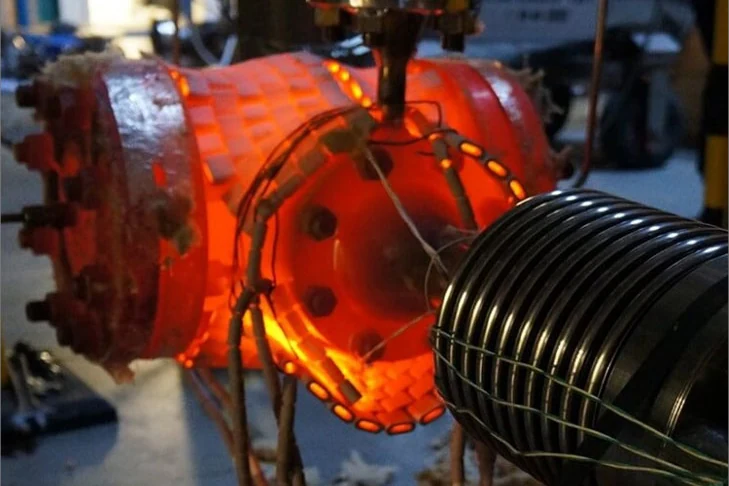
High Temperature Valves
Guide bushings and shaft bushings can also support or guide:
- Valve stems
- Guide shafts
- Actuator linkages
- Pivot mechanisms
- Support points
Here, temperature and thermal expansion need to be considered together with the required running clearance. A guide pin and a pivot pin in the same actuator linkage rarely need the same fit against the shaft, even inside one joint.
What Temperature Does the Bushing Actually Need to Handle?
The maximum temperature on a machine specification is only one part of the selection for high temperature bushings.
Before choosing a heat resistant bushing, separate the operating condition into three questions:
What is the continuous operating temperature?
This is the temperature the bushing and shaft see during normal production.
Continuous exposure is usually more important than a short temperature spike when evaluating long-term wear.
What is the maximum temperature?
A furnace, rolling line or thermal processing machine may reach a much higher temperature for a short period.
That peak still needs to be checked against the selected material.
How often does the temperature change?
Repeated heating and cooling can affect clearance, material stability and the condition of the mating components in the joint.
A bushing exposed to 250°C for a short cycle is not necessarily facing the same conditions as one operating continuously at 250°C.
Temperature should therefore be evaluated together with load, speed, movement and lubrication.
Which GLARY Bushings Fit High Temperature Applications?
There is no single high temperature bushing for every machine.
The right choice depends on what the bushing has to do while it is hot, so a guide bushing that only holds a shaft in line is a different duty from a pin bushing carrying continuous load in the same joint.
| GLARY Series | Typical Temperature Range* | Lubrication | Typical Load | Best Fit |
|---|---|---|---|---|
| Solid Lubricated Bearings → | Up to ~300°C+ | Solid lubricant | High | High heat, low speed, heavy load and difficult lubrication |
| PTFE Composite Bushings → | Up to ~250°C | Dry running | Medium | Elevated temperature, low friction and dry running |
| Bimetal Bearings → | Up to ~250°C | Oil / grease | High | Elevated temperature + heavy load + available lubrication |
| Bronze Wrapped Bushings → | Up to ~200°C | Oil / grease | Medium–High | Elevated temperature where reliable lubrication is available |
Temperature ranges are reference values, not universal limits for every material grade. Actual allowable temperature depends on the bearing material, load, sliding speed, movement, lubrication, shaft condition and operating cycle.

Solid Lubricated Bearings
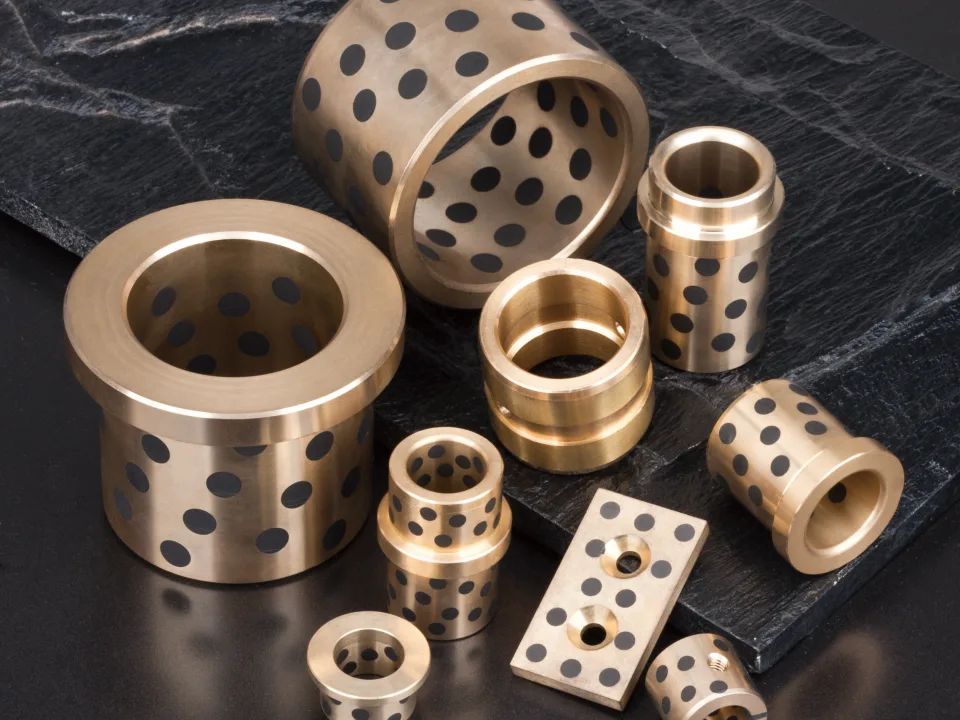
These are the main choice when temperature is high and conventional lubrication is difficult.
Solid lubricants such as graphite can continue to provide a lubricating function without depending on a conventional oil or grease film.
They are particularly useful for:
- High temperature
- Low-speed movement
- Oscillation
- Heavy load
- Dry running
- Difficult-to-reach bearing positions
For hot-zone equipment, furnace bushings and heat resistant bushings are better chosen on how the joint actually runs than on a high published temperature limit.

PTFE Composite Bushings
PTFE composite bushings are useful when low friction and dry running are important together with elevated temperature.
They are a good fit for applications where:
- Friction needs to remain low
- External lubrication is undesirable
- The load is within the material's working range
- Temperature is high but not beyond the composite material's limit
PTFE should not automatically be selected simply because the application is called "high temperature." Load, speed and the actual temperature profile still need to be checked.

Bimetal Bearings
Bimetal bearings are a strong option when high temperature is combined with heavy load and reliable oil or grease lubrication is available.
The metal sliding layer provides the load-carrying capability required in demanding machinery, while the lubrication system supports continuous operation at that heat.
For steel processing and other heavy industrial equipment, the combination of temperature + load + lubrication is often the deciding factor.

Bronze Wrapped Bushings
Bronze wrapped bushings can be considered for elevated-temperature applications where the machine has a dependable lubrication system.
They are more appropriate when:
- Oil or grease can be supplied
- The temperature remains within the selected material's range
- Load is significant
- The application does not require completely dry operation
They should not be treated as a universal solution for extreme-temperature dry running.
Which Bushing Should You Choose?
The temperature number alone does not determine which high temperature bushing to use.
Start with the actual operating conditions.
High temperature + difficult lubrication
Start with Solid Lubricated Bearings.
This is especially relevant when the bushing is inside a furnace, hot zone or enclosed mechanism where regular greasing is difficult. Heat resistant bushings are the usual answer at those positions.
High temperature + heavy load + lubrication available
Consider Bimetal Bearings.
This combination is common in heavy industrial machinery where load capacity is as important as temperature resistance, and the joint stays hot all shift.
High temperature + low friction + dry running
Consider PTFE Composite Bushings.
PTFE is particularly useful when low friction and maintenance-free operation are important. For joints that run with no grease point, see our guide to maintenance free bushings.
Elevated temperature + reliable oil or grease lubrication
Consider Bimetal Bearings or Bronze Wrapped Bushings.
The final choice depends on load, speed, movement and the actual temperature range.
High temperature + low-speed or oscillating movement
Solid Lubricated Bearings are often the first series to evaluate.
Low-speed movement, heavy load and difficult lubrication are conditions where solid lubrication can provide a practical advantage, and most guide bushings and linkage bushings in a hot plant run that way, with the joint at that temperature for weeks at a time.
Why Does Solid Lubrication Matter at High Temperature?
At moderate temperatures, oil or grease can provide a stable lubricating film between the shaft and the bushing inside the joint.
As the heat rises, that lubrication system can become the limiting factor.
The lubricant may lose viscosity, oxidize, migrate away from the sliding surface or require more frequent maintenance, and the joint has to be opened to do it.
This becomes a bigger problem when the bushing is installed inside a furnace or other hot zone, where process heat is continuous.
Solid-lubricated bearings take a different approach.
Instead of relying on a continuous supply of oil or grease, solid lubricants such as graphite are incorporated into the bearing material or the sliding surface of the joint.
This makes them particularly useful when the application combines:
- High temperature
- Low speed
- Heavy load
- Oscillation
- Limited access for lubrication
- Contamination
- Dry running
For this reason, high temperature and difficult lubrication often point toward the same bearing solution.
What Happens If the Bushing Is Not Selected for the Actual Conditions?
A high temperature bushing does not necessarily fail because the temperature simply exceeds one published number.
Failure can start earlier when several conditions combine.
Excessive wear
High temperature, heavy load and sliding movement can increase wear in the same joint even when each condition looks acceptable on its own.
Rising friction
As lubrication becomes less effective or the sliding material approaches its operating limit, friction can increase.
This can generate additional heat at the contact surface.
Clearance problems
Thermal expansion can reduce the running clearance between the shaft and bushing. At an articulation joint the effect is larger, because the pin, the bushing and the housing are three different materials.
If the clearance is too small, friction and the risk of seizure at the pin can increase.
If it is too large, the shaft may move excessively inside the bushing and cause impact or uneven wear on both the pin and the housing.
Contamination-related wear
Furnace bushings and steel mill bushings work in environments that can contain dust, scale, metal particles or water.
These contaminants can enter the sliding interface and accelerate wear on heat resistant bushings that are already running near their limit.
Shorter service life
A joint may keep working while its bushing wears.
The result can be increasing clearance, vibration, noise or movement before the joint finally stops the machine.
Selecting the material for the actual operating conditions helps avoid treating the bushing as the weak point of the system.
What Information Should You Send for High Temperature Bushing Selection?
A machine name alone is usually not enough to select the right high temperature bushing.
For a quotation or technical review, the following information about the joint is useful:
| Parameter | Example |
|---|---|
| Continuous temperature | 220°C |
| Maximum temperature | 280°C |
| Load | 25 kN |
| Sliding speed | 0.2 m/s |
| Movement | Rotary / oscillating / reciprocating |
| Lubrication | Dry / grease / oil |
| Shaft diameter | 50 mm |
| Shaft material | Hardened steel |
| Shaft hardness | 45–60 HRC |
| Shaft surface finish | Ra value |
| Environment | Scale / dust / water / chemicals |
| Working cycle | Continuous / intermittent |
Why do these details matter?
Temperature determines whether the material remains within its suitable range.
Load affects the pressure at the sliding surface.
Speed affects friction and heat generation.
Movement changes the wear pattern, whether that is rotation, oscillation or a short stroke.
Lubrication determines whether a dry-running or lubricated bearing design is appropriate.
Shaft condition affects friction and wear.
Environment matters when contamination can enter the sliding interface.
High Temperature Bushing Selection Examples
The examples below show why hot rolling mill bushings and furnace bushings cannot be selected on temperature alone.
Example 1
250°C + low speed + no reliable lubrication
The first series to evaluate is Solid Lubricated Bearings.
The high temperature bushing also has to run without regular grease or oil, and that requirement carries as much weight as the temperature here.
Example 2
200°C + low friction + dry running
PTFE Composite Bushings may be suitable when the load and speed remain within the material's operating range and the joint runs dry.
Example 3
220°C + heavy load + reliable grease lubrication
Bimetal Bearings should be considered.
Here, load capacity and lubrication are as important as temperature.
Example 4
Elevated temperature + regular oil or grease lubrication
Bronze Wrapped Bushings may be suitable when the actual temperature, load and speed remain within the selected material's limits, and the pin stays lubricated.
FAQ
Can a standard bushing be replaced with a heat resistant bushing without changing the housing?
Not always. The new bushing may have a different wall thickness, interference fit, running clearance, or thermal expansion behavior. Before changing the material, check the housing bore, shaft diameter, required clearance and installation method.
Should the bushing clearance be checked at room temperature or operating temperature?
Both matter. A clearance that looks correct during assembly may change after the bushing and shaft reach operating temperature. For applications with large temperature changes, the running clearance should be considered at the actual operating condition, not only at room temperature.
Does the shaft material matter in a high temperature bushing application?
Yes. Shaft hardness, surface finish and material can affect wear and friction. A suitable bushing material can still wear quickly if the mating shaft is too soft, damaged or has an unsuitable surface finish.
Can contamination affect a high temperature bushing?
Yes. Dust, scale, metal particles and other contamination can enter the sliding interface. This is especially important in steel mills, hot rolling equipment and furnace machinery. The bushing material should be selected together with the actual contamination conditions.
Is peak temperature or average temperature more important when selecting a bushing?
Both should be provided, but they describe different conditions. A bushing that sees a short temperature peak may behave differently from one that operates continuously at the same temperature. The duration and frequency of the temperature cycle should also be considered.
Does frequent heating and cooling shorten bushing life?
It can. Repeated thermal cycling causes the bushing, shaft and housing to expand and contract. If the application also has load changes, contamination or lubrication problems, these cycles can increase wear and affect the running clearance.
Can a high temperature bushing be used in a slow oscillating movement?
Yes, depending on the material and load. Slow oscillating movement can be more demanding than continuous rotation because the sliding interface repeatedly moves over a limited area. Load, oscillation angle, frequency and lubrication condition should be checked together.
What information is most useful when asking for a high temperature bushing quotation?
Temperature alone is not enough. The most useful information includes shaft diameter, housing bore, load, speed or oscillation frequency, continuous and peak temperature, movement, lubrication, shaft material and hardness, surface finish, contamination and expected working cycle. A drawing is also helpful when the bushing has a special size or installation requirement.
Need Help Selecting a High Temperature Bushing?
Send us the temperature, load, speed, movement, lubrication condition and shaft dimensions.
We can help identify the suitable GLARY bushing series and review the operating conditions before you place an order.
Need Self-Lubricating Bearings?
Contact GLARY for bearing solutions and pricing.