
Press Machine Bushings
Bushings for stamping and punch presses, designed for ram guides, crankshafts, wrist pins and connection arms. For reliable movement under repeated load, impact and reciprocating motion.
Where Are Bushings Used in a Press Machine?
Bushings are used at several moving points in a press machine.

Ram / Slide Guide
The ram moves up and down during each press cycle. Bushings are used in the guide system to control the ram's movement and maintain the required clearance.
Main Bushing
The main bushing supports the main shaft and works with the rotating press mechanism during repeated press cycles.
Wrist Pin
The wrist pin connects the ram and the upper connection. A bushing surrounds the pin and allows the connection to move as the press operates.
Connection Arm
Bushings are used at the connection points of the arm that transfers movement between the crank mechanism and the ram.
The exact bushing location and construction depend on the press design.
What Causes Bushing Wear in a Press?
Press bushings work through repeated cycles. The type of motion and the load at each position can be different.
Common causes of bushing wear include:
- Repeated reciprocating or oscillating motion
- High radial loads
- Impact loads during press operation
- Inadequate or inconsistent lubrication
- Incorrect running clearance
- Worn pins or shafts
- Misalignment
- Contamination entering the bearing area
- Excessive load or speed for the bushing construction
A bushing can wear faster when the bushing itself is not the only problem.
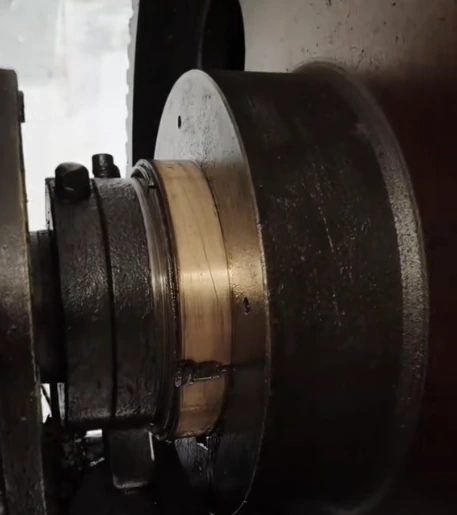
Is the Bushing Actually the Problem?
A worn bushing is not always the root cause.
Before replacing it, check the parts working with the bushing.

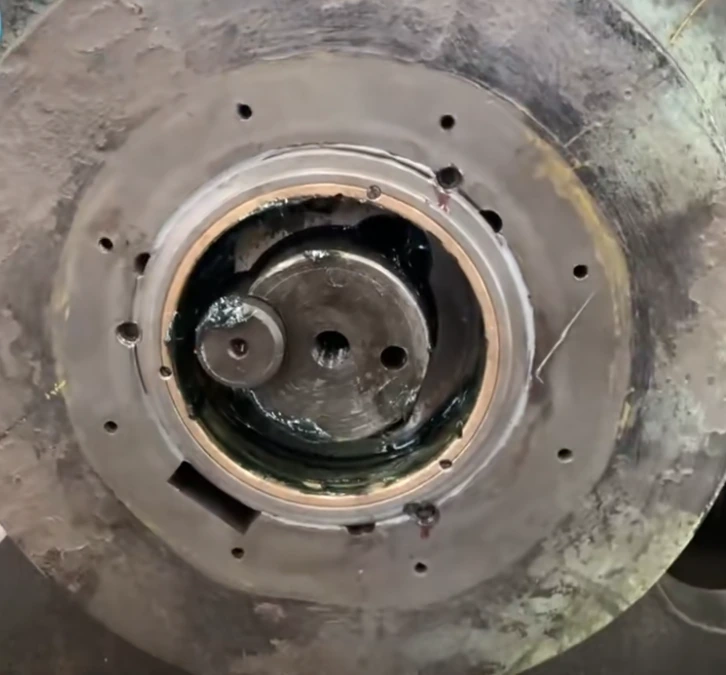
Check the Pin or Shaft
A worn or damaged pin can quickly wear a new bushing. Check the diameter, surface condition and roundness.
Check the Clearance
Too little clearance can cause binding or overheating. Too much clearance can allow excessive movement and impact.
Check Alignment
Misalignment can create uneven contact across the bushing surface instead of distributing the load evenly.
Check Lubrication
If the application requires oil or grease, insufficient lubrication can increase friction and wear.
Replacing the bushing without checking these conditions may only solve the problem temporarily.
What Happens When a Worn Bushing Is Left in Service?
As clearance increases, the moving parts can develop more play.
This may lead to:
- More movement between the pin and bushing
- Uneven contact and localized wear
- Increased impact during operation
- Further wear of the pin or shaft
- Changes in ram or linkage movement
- Higher maintenance requirements
- Unplanned press downtime
The bushing is a replaceable wear component, but continued operation with excessive clearance can affect the parts around it.
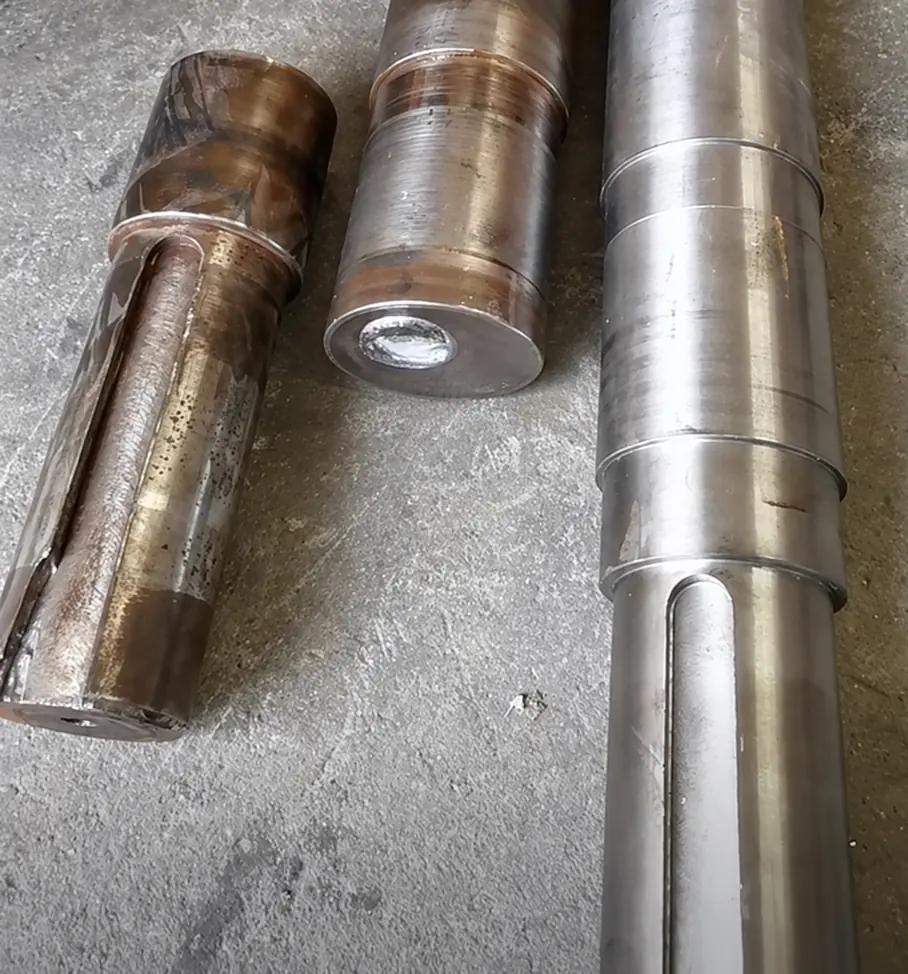
Which Bushing Fits Each Press Position?
There is no single bushing construction for every position in a press machine.
The suitable construction depends on the motion, load, speed, lubrication and operating conditions at that location.
| Press Machine Position | Composite Bushings | Bimetal Bearings | Solid Lubricated Bearings | Sintered Bushings | Bronze Wrapped Bushings |
|---|---|---|---|---|---|
| Ram / Slide Guide | ✓ | △ | ✓ | △ | △ |
| Main Bushing / Crankshaft | △ | ✓ | ✓ | △ | ✓ |
| Wrist Pin | △ | ✓ | ✓ | △ | ✓ |
| Connection Arm | △ | ✓ | ✓ | △ | ✓ |
✓ = common application candidate
△ = possible when the operating conditions are suitable
Ram / Slide Guide
The ram guide sees repeated reciprocating movement, relatively low speed and potentially high side loads.
Low-friction and wear-resistant constructions can be suitable where lubrication is limited or dry-running performance is required. Solid lubricated and composite constructions may be considered depending on the load and PV conditions. Other constructions can also be used when their lubrication and load requirements are met.
Main Bushing / Crankshaft
The main bushing supports the rotating shaft and can see high repeated loads during press operation.
Bimetal, bronze wrapped and solid lubricated constructions can be considered depending on the load, speed and lubrication system. Composite and sintered constructions require the operating conditions to be checked carefully.
Wrist Pin
The wrist pin works under oscillating movement and repeated load. Impact can also occur as the press changes direction.
Bimetal, solid lubricated and bronze wrapped constructions are common candidates for this type of application. Composite or sintered bushings may be suitable when the load, speed and PV conditions are within their working range.
Connection Arm
The connection arm transfers movement between the crank mechanism and the ram. Its bushings experience repeated oscillating movement and changing loads.
Bimetal, solid lubricated and bronze wrapped constructions can be suitable depending on the working conditions. Other constructions may also work when their load, speed and lubrication requirements are satisfied.
What Do You Need to Check Before Ordering?
Bushing dimensions are only part of the selection.
For a press machine bushing, we normally need to check:
- Bushing ID, OD and length
- Pin or shaft diameter
- Load
- Speed or oscillation frequency
- Type of movement
- Lubrication method
- Operating temperature
- Required clearance
- Shaft or pin surface condition
- Available installation space
- Existing bushing construction, if known
If you have an existing part, a drawing or sample can make replacement selection much easier.
Replacing an Existing Press Machine Bushing
If you are replacing a bushing that is already installed in a press, you do not always need to start from scratch.
Send us the information you have, such as:
Drawing
Bushing dimensions and tolerances.
Part Sample
An existing bushing can help us check the construction and dimensions.
Pin or Shaft Information
Diameter, material and surface condition, if available.
Operating Conditions
Load, movement, speed, lubrication and temperature.
Photos
Photos of the bushing and its installation position can help identify the application.
If the original bushing material is unknown, we can review the working position and operating conditions to determine a suitable construction.
Why Different Press Positions May Need Different Bushings
A stamping or punch press does not necessarily use the same bushing construction at every position.
The working conditions can be very different.
A ram guide mainly deals with reciprocating movement and guide loads.
A crankshaft bushing works with continuous rotation and repeated radial load.
A wrist pin sees oscillating movement and can experience impact.
A connection arm bushing works under repeated movement and changing loads.
For this reason, bushing selection should start with the working position and operating conditions, not simply the name of the machine.
Selection Starts With the Application
Before selecting a bushing, look at the complete working condition:
The same press may require different bushing constructions at different positions.
If the original bushing is available, its dimensions and application information can also help determine the replacement.
FAQ
What types of presses use these bushings?
These bushings can be used in different stamping and punch press designs. The actual bushing locations and dimensions depend on the machine structure.
Can one bushing material be used throughout a press machine?
Not necessarily. Different positions can have different loads, motion and lubrication conditions, so the suitable bushing construction may also be different.
How do I know which bushing construction I need?
Start with the bushing location and working conditions. Load, motion, speed, lubrication, temperature and clearance should all be considered.
Can you make replacement bushings from a drawing?
Yes. A drawing with dimensions and tolerances provides useful information for replacement and custom bushing production.
What if I do not know the original bushing material?
Send us the bushing dimensions, pin or shaft information, application conditions and photos if available. We can review the application and recommend a suitable construction.
Should I replace the pin when replacing the bushing?
Not always. The pin or shaft should be inspected first. If it is worn, damaged or out of tolerance, installing a new bushing may not solve the problem.
Need Press Machine Bushings?
Send us your drawing, bushing dimensions or application details.
We can help you check the suitable bushing construction and replacement requirements.
Send an InquiryNeed Self-Lubricating Bearings?
Contact GLARY for bearing solutions and pricing.