
Aerospace Bushings for Aircraft Control, Hinge and Actuator Positions
Aerospace bushings for aircraft control, landing gear, hinge and actuator positions, where low friction and long wear life matter. Aircraft bushings and flight control bushings, made to drawing or sample.
Where Are Bushings Used in Aircraft?
Bushings are used at many aircraft joints where one component has to move against another without excessive friction or wear. The position decides the design: aircraft landing gear bushings and aircraft control bushings on the same airframe rarely share the same construction, because the load at a landing gear pivot, the articulation at a hinge and the number of cycles all differ.
Typical positions include the five below, from the flight controls at the wing and tail to the passenger door hinges.
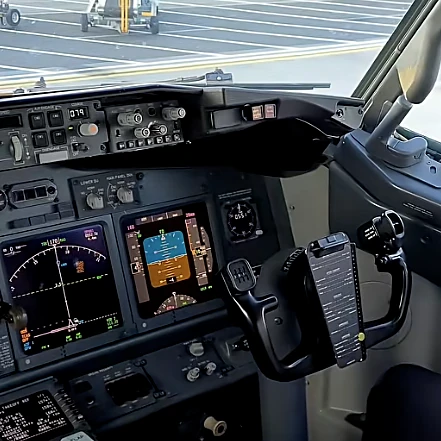
Flight Control Linkages
Aircraft control bushings are used around control linkages, pivots and other moving joints connected to the aileron, elevator and rudder systems.
These positions may see repeated small-angle oscillation rather than continuous rotation. The bushing needs to keep the joint moving smoothly while controlling clearance between the shaft and housing.

Landing Gear
Aircraft landing gear bushings are used in struts, pivot points and actuation mechanisms.
These locations see high loads and shock loads during landing, followed by repeated articulation during takeoff, landing and ground operations.

Flaps, Slats and Spoilers
Wing control surfaces use moving joints and actuator connections that operate repeatedly during flight.
The movement is often limited-angle oscillation or reciprocation rather than full rotation. Consistent friction and resistance to wear are important because excessive play can affect the movement of the control surface.

Actuators
Aerospace actuator bushings can be found around actuator rods, pivots and linkage connections.
The rod may move back and forth repeatedly under load. The bushing has to accommodate reciprocation without developing excessive clearance or uneven wear.

Aircraft Hinges and Latches
Aircraft hinge bushings are used on passenger doors, cargo doors, access panels, seats and other aircraft structures.
These mechanisms may not carry the same loads as landing gear, but a hinge and latch assembly can complete many cyclic movements during the service life of the aircraft.
What Can Go Wrong When the Bushing Is Not Doing Its Job?
A bushing does more than separate a shaft from a housing. It also controls the clearance between moving parts, and when the bearing surface wears, that clearance gradually changes.
For an aircraft mechanism, a small amount of extra play becomes important when the joint is part of a control linkage, an actuator or a hinge bracket.
Excessive Wear
Wear increases the clearance between the shaft and bushing.
The result may be more movement at the joint than the original design allows. Continued wear can also damage the shaft or housing, turning a relatively simple bushing replacement into a larger repair.
Unstable Friction
A control linkage or actuator should move predictably.
If friction changes during the stroke, the mechanism may not move smoothly. Stick-slip is particularly undesirable in a hinge or a control linkage that needs controlled, repeatable movement.
Fretting and Surface Damage
Small oscillations under load can cause repeated relative movement between the shaft and bushing.
Over time the vibration at the contact surfaces contributes to surface wear, fretting or localized damage.
Heat and Wear at the Sliding Surface
Higher friction produces more heat at the contact surface.
This becomes more important when the mechanism operates repeatedly, has limited cooling or is exposed to a wide temperature range.
Why Aerospace Bushing Selection Is Different
An aircraft bushing cannot be selected by load capacity alone.
The same bushing may behave very differently in a continuously rotating application and in a control linkage that moves only a few degrees at a time.
Before selecting an aircraft bushing, the actual movement and the operating conditions need to be understood.
Movement
Is the movement:
- oscillating
- reciprocating
- rotating
- intermittent
A flight control joint may move through a small angle many times, while aerospace actuator bushings may see repeated reciprocation.
Load
Look at both the normal operating load and the peak load.
Landing gear bushings, for example, can experience substantial shock loads during landing. A linkage may have a lower overall load but operate through many more cycles.
Temperature
Temperature affects friction, wear and material performance.
The expected minimum and maximum operating temperatures should be considered rather than using normal ambient temperature for selection.
Lubrication
Some aircraft locations are difficult to access after assembly.
If regular relubrication is difficult or undesirable, a self-lubricating bushing can simplify maintenance. In other applications, an oil- or grease-lubricated design may still be the better choice. Read about maintenance free bushings for positions that run without relubrication.
Weight and Space
Aircraft structures place tight limits on both weight and installation space, at every hinge, pivot and bracket.
A thin-wall bushing can sometimes provide the required bearing surface without adding unnecessary material, which keeps the part lightweight without giving up load capacity.
Environment
Moisture, salt exposure, contamination and temperature changes can all affect service life.
The bushing material and mating shaft surface should therefore be considered together.
When Should an Aircraft Bushing Be Replaced?
A worn bushing does not always fail suddenly. The first indication is often a change in the behavior of the mechanism.
Look for these signs at the joint, and check the pin and the hinge line as well as the bushing.
- scoring
- wear marks
- surface damage
- deformation
- corrosion
- abnormal transfer material
Aerospace Bushing Selection Starts With the Joint
The right aircraft bushing is not determined by the aircraft model alone.
Two bushings installed on the same aircraft may have completely different requirements because one is used in a landing gear pivot while another is used in a cabin hinge.
For a reliable selection, start with four questions.
Where is the bushing installed?
Identify the shaft, pivot, linkage, actuator or hinge position.
How does it move?
Determine whether the movement is rotating, oscillating or reciprocating.
What does it carry?
Consider normal load, peak load and shock loading.
What environment does it see?
Check temperature, lubrication, moisture, contamination and fluid exposure.
Once these conditions are clear, the material for aircraft control bushings, aircraft hinge bushings and actuator rod ends can be selected from the load and the movement at that pivot or hinge rather than from the application name alone.
What Should You Check Before Ordering Aircraft Bushings?
A part number alone is often not enough to select the right bushing.
If you are sourcing aircraft bushings for a new design or a replacement application, provide as much of the following information as possible.
Basic Dimensions
- Bore diameter
- Outside diameter
- Length
- Wall thickness
- Housing dimensions
- Shaft dimensions
Operating Conditions
- Radial load
- Peak load
- Sliding speed
- Oscillation angle
- Number of cycles
- Rotation or reciprocation
- Operating temperature
Lubrication
Specify whether the bushing will run:
- dry
- grease lubricated
- oil lubricated
- intermittently lubricated
If lubrication is not possible after installation, state this clearly.
Mating Shaft
The shaft is part of the bearing system, and this applies to a hinge pin as much as to a shaft in a linkage.
Its material, hardness, surface finish and condition can directly affect bushing wear and service life.
Environment
Also specify whether the bushing is exposed to:
- moisture
- salt spray
- hydraulic fluids
- fuel
- cleaning chemicals
- dust or contamination
This information helps prevent selecting a material that looks suitable on paper but performs poorly in the actual aircraft structure.
Choosing a Bushing for the Actual Aircraft Position
There is no single aerospace bushing that is best for every aircraft component. The better approach is to start with the position and the operating conditions, because the same part behaves differently under pure articulation and under continuous rotation.
| Aircraft position | Typical movement | Main concern | Bushing types to consider |
|---|---|---|---|
| Landing gear struts | Oscillation / articulation | High load, shock load, wear | PTFE Composite, Bronze Wrapped, Bimetal |
| Landing gear pivots | Oscillation | Load, wear, corrosion | PTFE Composite, Bronze Wrapped, Solid Lubricated |
| Flight control linkages | Small-angle oscillation | Friction, clearance, wear | PTFE Composite, Bronze Wrapped |
| Aileron / elevator / rudder linkages | Oscillation | Consistent movement, wear | PTFE Composite, Bronze Wrapped |
| Flap / spoiler actuators | Reciprocation / oscillation | Friction, repeated cycles | PTFE Composite, Bimetal |
| Actuator rod connections | Reciprocation | Load, wear, alignment | PTFE Composite, Bimetal |
| Aircraft hinges | Cyclic movement | Friction, wear | PTFE Composite, POM Composite, Bronze Wrapped |
| Seat and interior mechanisms | Pivoting / cyclic movement | Compact design, wear | POM Composite, PTFE Composite |
| Lubricated high-load joints | Oscillation / rotation | Load, lubrication | Bimetal, Bronze Wrapped |
| High-temperature, low-speed joints | Oscillation / rotation | Temperature, load, wear | Solid Lubricated, Bimetal |
The table is a starting point, not a substitute for application calculations.
For example, a landing gear bushing and an aircraft hinge may both be called a bushing, but their loads, articulation and required service life can be completely different.
Which GLARY Bushing Fits the Application?
Aerospace bushings for these positions come from five GLARY families. The right one depends on the joint, on the load and on the articulation, so the aircraft hinge bushings on a cabin door and the aircraft landing gear bushings on a strut rarely come from the same family.

PTFE Composite Bushings
PTFE composite bushings are the main option to consider for aircraft control bushings when the application requires low friction, controlled movement and good wear resistance.
They are particularly relevant to:
- flight control linkages
- landing gear pivots
- actuator connections
- flap and spoiler mechanisms
- aircraft hinges
The main advantage is a low-friction sliding surface that does not rely on continuous grease lubrication, which makes this the first material family to evaluate for an aerospace application with oscillating or reciprocating movement. The wall can also be thin, so the part stays lightweight.
View PTFE Composite Bushings →
Bimetal Bearings
Bimetal bearings are more relevant where the joint combines relatively high load with low speed and a defined lubrication condition.
They can be considered for:
- heavily loaded pivots
- actuator connections
- lubricated landing gear mechanisms
- other high-load, low-speed joints
The final choice depends strongly on load, speed, lubrication and temperature.
View Bimetal Bearings →
Solid Lubricated Bearings
Solid lubricated bearings are worth considering when the application requires a bearing that can operate under demanding load and temperature conditions without relying on conventional grease.
They are more suitable for specific high-load, low-speed or high-temperature mechanisms than as a general replacement for every aircraft bushing.
View Solid Lubricated Bearings →
Sintered Bushings
Sintered bushings can be considered where oil-impregnated bearing characteristics match the operating conditions.
They are better suited to applications where the speed, load, temperature and lubrication requirements fall within the material's operating range.
They should not be selected simply because the application is classified as aerospace.
View Sintered Bushings →
Bronze Wrapped Bushings
Bronze wrapped bushings are a practical option for lubricated aircraft joints where load capacity, wear resistance and repeated movement are important.
They can be considered for:
- landing gear pivots
- articulated joints
- flight-control mechanisms
- other lubricated pivot points
Lubrication method, shaft condition and load should be checked before replacing a composite bushing with a wrapped bronze design.
View Bronze Wrapped Bearings →FAQ
Are aerospace bushings available in standard sizes?
Some aircraft bushing applications can use standard dimensions, while others require a specific wall thickness, flange, groove, hole pattern or installation tolerance. The available design depends on the shaft and housing arrangement rather than the aircraft application alone.
Can aerospace bushings be supplied as flanged or special-shaped parts?
Yes. Depending on the joint design, bushings can be produced with features such as flanges, lubrication holes, grooves, steps or other special dimensions. A drawing is the best way to confirm whether the required geometry can be produced.
What tolerance should be used for an aircraft bushing?
There is no single tolerance that applies to every aircraft bushing. The required bore clearance depends on the bushing material, shaft diameter, operating temperature, load and movement. The housing fit also needs to be considered because excessive interference or insufficient retention can affect the final bore size.
Does the housing material affect bushing performance?
Yes. The housing can affect installation, heat transfer, retention and dimensional stability. A bushing should be evaluated together with the housing and mating shaft instead of treating the bushing as an independent part.
Can an aerospace bushing be pressed into a blind housing?
It depends on the installation design. Blind housings may require a suitable lead-in, installation tool or retention method to prevent damage during assembly. The installation method should be considered when defining the bushing dimensions.
How should a new bushing be installed?
The installation method depends on the bushing construction and housing. The housing should be clean and correctly sized, and the bushing should be installed squarely to avoid distortion. Excessive force or an unsuitable installation tool can damage the bearing surface.
Can aircraft bushings be used as replacement parts for an existing design?
They can be considered when the replacement has the same dimensional, material and operating requirements as the original component. For a replacement project, the original drawing or worn part can help identify the critical dimensions and installation conditions.
How can bushing life be estimated before production?
Bushing life depends on more than operating hours. Load, sliding distance, movement pattern, pressure, temperature, lubrication and mating surface condition all influence wear. For oscillating applications, the angle and number of cycles are particularly important.
Why can two bushings with the same dimensions have different service lives?
Because dimensions do not determine the entire bearing condition. Two bushings with the same ID, OD and length can use different sliding materials or lubrication methods and therefore behave differently under the same load and movement.
Should the bushing or the shaft be changed when clearance becomes excessive?
The answer depends on the source of the clearance. If the bushing is worn while the shaft remains within its required condition, replacing the bushing may be sufficient. If the shaft has also worn, scored or corroded, both components may need to be evaluated.
Can aerospace bushings be supplied for prototype and low-volume programs?
This depends on the part design, material and production requirements. For prototype or low-volume projects, providing a drawing, expected quantity and application conditions at the quotation stage helps determine the most suitable manufacturing route.
Need Aerospace Bushings for a Specific Position?
Send the drawing, the sample or the details of the joint.
Send the Position and the Operating Conditions
Aerospace bushings, aircraft bushings and flight control bushings are quoted from the position on the aircraft, the load at the joint and the movement it makes. Whether the part sits in a control linkage, a hinge or a landing gear pivot, the same four questions start the review.
Send an InquiryNeed Self-Lubricating Bearings?
Contact GLARY for bearing solutions and pricing.
Need Self-Lubricating Bearings?
Contact GLARY for bearing solutions and pricing.