
Injection Molding Machine Bushings
Self-lubricating bushings for toggle mechanisms, guide systems, ejector units and other moving parts of injection molding machines. Custom sizes available for replacement and OEM applications.
01 — Find the Bushing in Your Machine
Injection molding machines use bushings in several moving and guiding mechanisms. The exact locations vary by machine design, but common applications include toggle and link mechanisms, guide systems, ejector systems and injection unit components.

Toggle / Link Bushings
Used at pivot points in toggle and link mechanisms, where the bushing is exposed to repeated oscillating movement and load.
Guide / Crosshead Bushings
Used to guide moving components and maintain alignment during repeated linear movement.
Ejector Bushings
Used in ejector mechanisms that move repeatedly during machine cycles.
Injection Unit Bushings
Used in selected guiding and sliding components of the injection unit, depending on machine design.
What Does the Bushing Actually Do?
A bushing creates a controlled bearing surface between moving machine components. Its job is not only to reduce friction, but also to guide movement and protect the surrounding parts from wear.
Support Movement
Allows controlled movement
The bushing provides a bearing surface between the moving pin, shaft or other mating parts.
Reduce Friction
Reduces metal-to-metal contact
The bearing material helps reduce friction between the bushing and the moving component.
Guide Components
Helps maintain alignment
In guide applications, the bushing supports the moving component and helps maintain the required position during repeated machine cycles.
Control Wear
Protects the mating parts
The bushing acts as a replaceable wear surface, helping protect pins, shafts and other machine components from direct wear.

A Bushing Is Not Just a Size
ID, OD and length tell you the size of a bushing. They do not tell you whether it is suitable for the application. The operating conditions matter just as much.
Dimensions
Start With the Dimensions
These dimensions define the basic size of the replacement bushing.
Operating Conditions
Then Look at the Application
How much load does the bushing carry?
Rotating, oscillating, sliding or reciprocating?
How fast does the movement occur?
Dry running, grease or oil?
What temperature does the bushing operate at?
Bearing Material
The Material Depends on the Job
| Material | Typical consideration |
|---|---|
| PTFE Composite | Low friction and low-maintenance operation |
| POM Composite | Wear resistance and edge-load resistance |
| Bimetal | Higher-load applications |
| Solid Lubricated | Heavy load and oscillating movement |
Material selection depends on the actual operating conditions.
Two bushings with the same dimensions may require different bearing materials depending on load, movement and lubrication conditions.
Why Do Injection Molding Machine Bushings Wear?
Injection molding machines run through repeated cycles, so bushings are exposed to repeated movement and load. Wear becomes a problem when the operating conditions exceed what the bushing can handle.
Normal Operation
Pin and Bushing Work Together
The bushing provides a controlled bearing surface between the pin and housing. The moving part can rotate, oscillate or slide as designed.
Repeated Movement
Cycles Gradually Affect the Bearing Surface
Injection molding machines repeat the same movements again and again. Load, motion and lubrication conditions continue to act on the bushing during each cycle.
Wear Develops
The Bearing Surface Begins to Wear
If the operating conditions are demanding, the bearing surface can gradually wear. Misalignment, insufficient lubrication or excessive load can accelerate the process.
Clearance Increases
More Clearance Changes the Movement
As the bushing wears, the clearance between the bushing and pin can become larger. This may lead to more movement, vibration or loss of alignment.
What Can Increase Bushing Wear?
Repeated Movement
Frequent oscillating, sliding or reciprocating movement creates repeated wear.
Load
Different machine positions carry different loads. Higher or uneven loads can increase wear.
Lubrication
The lubrication condition affects friction and wear. Some bearing materials are designed for dry or low-maintenance operation.
Misalignment
Poor alignment can create uneven contact between the bushing and mating component.
Clearance
Incorrect clearance can affect the contact between the bushing and pin and may accelerate wear.
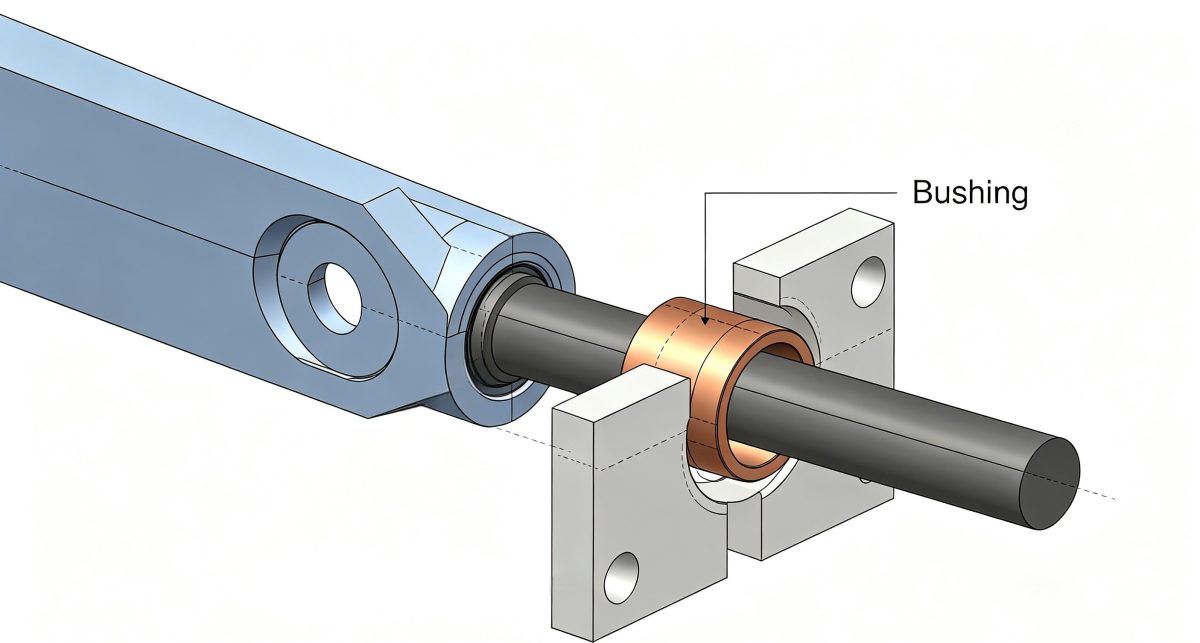
Toggle & Link Bushings
Bushings used at pivot points in injection molding machine toggle and link mechanisms.
Oscillating Movement
The link repeatedly rotates around the pin as the clamping mechanism opens and closes.
Cyclic Load
The bushing is exposed to repeated loading during the clamping cycle. The actual load depends on the machine design and operating conditions.
Wear & Lubrication
Repeated movement, load, lubrication and alignment all affect bushing wear at the pivot.
WHY THIS POSITION MATTERS
Toggle and link bushings work through repeated pivoting movement. For demanding applications, the bearing material needs to match the actual load, motion and lubrication conditions.
Guide, Crosshead & Ejector Bushings
Not all injection molding machine bushings work in the same way. Guide, crosshead and ejector applications involve different types of movement and alignment requirements.
MACHINE MOVEMENT
Crosshead Bushings
Used to guide the crosshead or related moving components in the toggle mechanism.
The bushing helps control movement and maintain alignment during repeated machine cycles.
Tie-Bar / Platen Guide Bushings
Used in guide arrangements around the moving platen or tie bars, depending on machine design.
The bushing supports guided movement and helps control clearance between mating components.
Ejector Guide Bushings
Used in the ejector system where components move repeatedly during the molding cycle.
Low friction, wear resistance and consistent movement can be important depending on the application.
Match the Bushing to the Job
Different positions in an injection molding machine can have different load, movement and lubrication conditions. The bearing material should be selected according to the actual application.
These are general guidelines. Final material selection depends on the actual load, movement, speed, lubrication and temperature.

PTFE Composite Bushings
Low friction and low-maintenance operation.
Learn More →
POM Composite Bushings
Good wear resistance and resistance to edge loading.
Learn More →
Bimetal Bearings
For applications requiring higher load capacity.
Learn More →
Solid Lubricated Bearings
For heavy-load and oscillating applications.
Learn More →Not sure which material fits your application?
Send us the bushing drawing, dimensions or machine information for review.
Send Your Drawing →Injection Molding Machine or Injection Mold?
Injection molding machines and injection molds both use bushings, but they are different applications. The components, movement and operating conditions are not always the same.
Machine Bushings ≠ Mold Bushings
Injection Molding Machine
Bushings used in the machine itself
Pivot points in the clamping mechanism
Guiding moving components
Guiding and alignment
Repeated movement during machine cycles
Selected guiding and sliding components, depending on machine design
Injection Mold
Bushings used inside the mold
Guide the mold halves during opening and closing
Maintain alignment between mold components
Guide the ejector system
Support repeated sliding movement in selected mold designs
Replacing a Bushing? Start With What You Have.
You do not need to know the exact bearing material before contacting us. Send the information you have, and we can review the application with you.
Drawing
Have a technical drawing?
Send the drawingSample
Have the old bushing or a sample?
Send photos or sample detailsDimensions
Only know the basic dimensions?
ID · OD · LengthPart Number
Have an existing part number or machine reference?
Send the numberWHAT ELSE HELPS?
If possible, tell us where the bushing is used, how it moves, the approximate load, and how it is lubricated.
Have a replacement bushing to quote?
Send us your drawing, sample photos or dimensions. We will review the application and get back to you.
Send Your DrawingFAQ
Frequently Asked Questions
Can you replace an existing bushing with a different material?
Sometimes. A material change should be based on the actual load, movement, lubrication and mating conditions rather than dimensions alone. We can review the existing application before recommending a change.
Can you supply non-standard sizes for injection molding machines?
Yes. Replacement and custom bushings can be produced according to drawings, samples or specified dimensions, depending on the design and quantity.
Do I need to know the original bushing material to order a replacement?
No. If the original material is unknown, you can provide the drawing, dimensions, sample photos, part number or machine information. The application details can help determine a suitable replacement.
Can you help identify a bushing from a photo or sample?
Yes. Photos can help with an initial review, especially when combined with dimensions, the machine model and information about where the bushing is installed.