
Pneumatic Systems Bushings
Bushings for pneumatic cylinders, actuators, valves and moving mechanisms. GLARY supplies self-lubricating bushings for the mechanical parts that guide, pivot and reciprocate in pneumatic equipment.
Where Are Bushings Used in Pneumatic Systems?
Bushings are used at mechanical moving points in pneumatic equipment. The exact location depends on how the part moves and where the load is carried.

Pneumatic Cylinders
Piston Rod Guides
Bushings guide the piston rod during repeated in-and-out movement and control the clearance between the rod and guide.
Guide Rods
Guided cylinders may use separate guide rods to carry side loads and keep the moving assembly aligned. Bushings can support these rods during repeated linear movement.
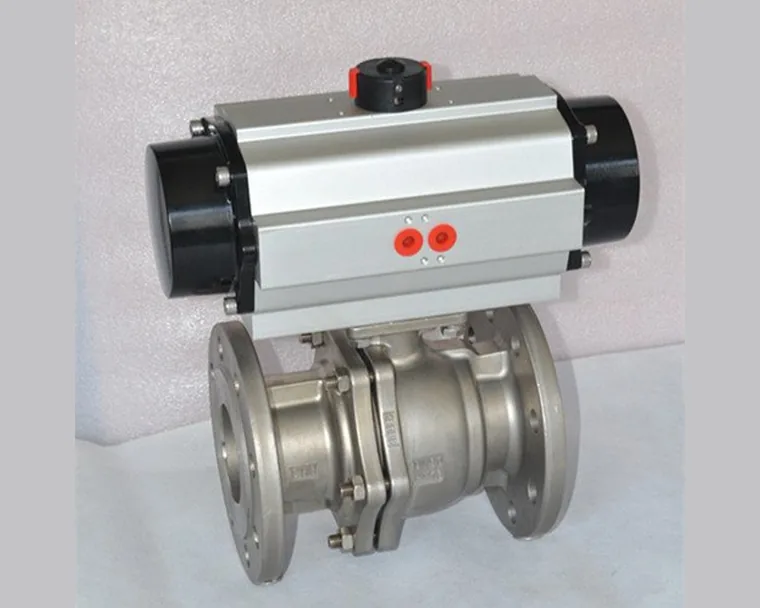
Pneumatic Actuation & Control
Actuator Rods and Guide Mechanisms
Pneumatic actuators used for clamping, pushing, lifting, feeding or positioning may have rods or guide mechanisms that move repeatedly. Bushings can support these moving parts and control clearance during operation.
Pivot and Linkage Points
Actuators can also transfer motion through arms, links and pivot joints. These points may use bushings for repeated oscillating movement.
Valve Stems and Mechanical Guides
Some pneumatic valve assemblies have moving stems, pins or guide points. Where these parts move repeatedly against a bearing surface, a bushing can control clearance and wear.
What Do These Bushings Need to Handle?
Pneumatic applications are usually not about one single load or speed, and the parts sold as pneumatic cylinder bushings, pneumatic actuator bushings and pneumatic valve bushings all meet different versions of the same problem, while a cylinder bought from a catalogue lists them as air cylinder bushings. The bushing has to deal with the way the machine actually moves.
Repeated Rod Movement
A piston rod may move in and out thousands of times during normal production. The bushing needs to keep friction and wear under control throughout these repeated strokes, without an oil film to help it, and the rod seal has to hold while it does.
Side Load
The rod is not always loaded perfectly along its centerline. Tooling, fixtures and external loads can put side force on the rod or guide system. The bushing needs enough support to keep the movement stable.
Continuous Cycling
Some actuators cycle almost continuously. A bushing that works well during occasional movement may not be the right choice for a machine running several cycles every minute.
What Changes When a Pneumatic Bushing Starts to Wear?
Different pneumatic mechanisms show different signs of bushing wear, and air cylinder bushings rarely give any warning beyond the ones below. The checks are grouped by the part of the machine where they show up first.
On Rods and Guides
- More radial play
- Uneven rod movement
- Visible wear on the rod
- Increasing clearance and a dry running surface
On Actuator Linkages
- More movement at the joint
- Loose or inaccurate positioning
- Increased play during repeated cycling
- Uneven movement under load
On Valve Mechanisms
- Excessive play around the moving component
- Less consistent actuation
- Visible wear around the guide or pivot point
On Automated Equipment
- Positioning becomes less consistent
- A mechanism develops more backlash
- Movement becomes noisy or uneven
- The same adjustment no longer gives the same result
What Can a Worn Pneumatic Bushing Affect?
A worn bushing does more than create clearance at one point. Pneumatic cylinder bushings, actuator bushings, pneumatic valve bushings and valve stem guides all pass the problem on to the parts around them.
Loss of Guidance
More clearance allows the rod, guide or moving part to move outside its intended path, and the wear that follows stays in the mechanism rather than in the air system.
More Load on Other Components
Once the moving part is no longer properly supported, the load can shift to rods, pins, seals or other guide surfaces.
Poor Positioning
In pneumatic automation, excessive play can affect where a clamp, feeder or positioning mechanism stops.
Faster Wear
A loose joint or guide creates more movement at the contact surface. The bushing may wear faster, and the mating component can also be damaged.
More Maintenance
Once the original clearance is lost, replacing only the bushing may not be enough. The rod, pin or mating surface may also need inspection.
What Makes Pneumatic Bushing Selection Difficult?
A pneumatic system may contain several different moving points, and they do not all need the same bushing. One position may run dry at high cycle frequency. Another may carry a higher side load. A pivot may see oscillating movement rather than straight-line motion.
That is why replacing a bushing by size alone can lead to the wrong material.
Before choosing, check:
- What part is moving?
- Is the movement linear, reciprocating or oscillating?
- What load does the bushing carry?
- How often does it cycle?
- Is lubrication available?
- What is the mating shaft or pin made of?
- What clearance is required?
- Is the existing rod, pin or guide already worn?
Which Bushings Work for Pneumatic Systems?
Suitability for Pneumatic Systems
| Product | Pneumatic System Fit | More Relevant To |
|---|---|---|
| Composite Bushings | ★★★★★ | Rod guides, guide rods, actuator guides, dry-running mechanisms |
| Solid Lubricated Bearings | ★★★★☆ | Higher-load guides, actuator mechanisms, dry-running pivots |
| Bimetal Bearings | ★★★☆☆ | Higher-load or shock-loaded mechanisms, lubricated applications |
| Sintered Bushings | ★★☆☆☆ | Selected rotating or moving mechanisms with oil-impregnated operation |
| Bronze Wrapped Bushings | ★★☆☆☆ | Heavier-load, lubricated pivots and guide points |
Composite Bushings
For a dry-running piston rod or guide rod, this is usually the first material to look at. The main reasons are low friction, wear resistance and good performance during repeated movement. Where a rodless actuator or a gripper works in dust, the POM variant of the same construction lasts longer.
Solid Lubricated Bearings
Consider these when the guide sees more load or the application needs a dry-running bearing with higher load capacity. They are also useful where regular grease lubrication is not practical.
Bimetal Bearings
These are more relevant when the guide sees higher loads, impact or shock. They are not necessarily the first choice for a normal dry-running cylinder rod.
Sintered Bushings
Sintered bushings can work in selected pneumatic mechanisms where oil-impregnated operation fits the application. Check the load, speed and lubrication conditions before choosing this type.
Bronze Wrapped Bushings
These are better suited to robust, lubricated applications where the bushing has to handle higher loads. For a typical dry-running piston rod guide, other materials may be a better starting point.
How Do You Choose the Right Bushing?
Start with the actual working conditions, not just the old part number. Movement, load, lubrication and cycle rate settle the material before the dimensions do.
Movement
Is the bushing working with a reciprocating piston rod, a guide rod, an actuator rod, or an oscillating or pivoting part? Pneumatic actuator bushings at a mount pivot see a slow swing, so the movement decides the material. For repeated dry reciprocation, start by checking composite materials.
Load
Check the radial load on the bushing. If the guide sees high side loads or shock, move toward a higher-load material such as solid lubricated or bimetal.
Lubrication
For dry operation, look first at composite or solid-lubricated options. If the application is lubricated, bimetal, sintered and bronze wrapped bushings may also be considered.
Speed and Cycle Rate
Cycle rate matters as much as rod speed. A cylinder making a short stroke every few seconds can put more demand on a bushing than a cylinder that moves only occasionally. Look at the actual combination of: stroke + speed + load + cycle rate.
Rod Condition
Check the rod before replacing the pneumatic cylinder bushing, and measure the rod guide and the end cap bore while the cylinder is open. A rod guide and its cylinder bore are usually replaced as a pair, so the housing diameter has to be checked as carefully as the rod diameter. A worn, scratched or poorly aligned rod can shorten the life of a new bushing, and it is the one check that is easy to skip once the replacement is on the bench. We select the bushing based on the actual load, movement, speed and lubrication conditions. Send the old bushing dimensions, a drawing or a sample with those figures, and we will come back with a material and a size.
FAQ
Can you replace an OEM bushing with a GLARY bushing?
Yes. If the dimensions and operating requirements match, a GLARY bushing can be supplied as a replacement. A drawing, sample, or original part number can be used to check the replacement.
Can you supply bushings for pneumatic equipment that is no longer supported by the original manufacturer?
Yes. For older or discontinued equipment, we can work from the existing bushing, component drawing, or measured dimensions to develop a replacement.
What if I do not have a drawing for the original bushing?
A drawing is not required in every case. Photos, the old bushing, rod or pin diameter, housing dimensions, and basic operating information can give us a starting point for identification.
Can one order include different bushing sizes for the same pneumatic machine?
Yes. If a machine uses several bushing sizes or different designs, they can be reviewed together. This can be useful for replacement parts and maintenance orders.
Can GLARY supply bushings for pneumatic equipment built to a customer's own design?
Yes. We can work with customer drawings and specified dimensions for OEM or custom pneumatic equipment.
Can you help identify a bushing from a worn sample?
Yes. A worn sample can still provide useful information. If possible, send the sample together with the original rod or housing dimensions, application details, and photos of the installation.
Need a Pneumatic Bushing?
Send us the drawing, dimensions or application details. We can help you check the material and size based on the actual load, movement, speed and lubrication conditions.
Need Self-Lubricating Bearings?
Contact GLARY for bearing solutions and pricing.